




 Save
Few pieces of jewellery are as quiet, or as meaningful, as the bichiya. It sits on the toe, almost out of sight, yet for millions of Indian women it is one of the first things they put on as a bride and one of the last things they would ever take off. Today the bichiya is also a fashion piece, worn with sandals, payal and even jeans. In this guide, the design team at Keyura Jewellery in Dehradun explains what a bichiya is, which toe it goes on, what it means, and walks you through 18 bichiya designs, from simple everyday pairs to bridal sets, with tips on fit, comfort and care.
What is a bichiya? Meaning in English and in other languages
In English, a bichiya is simply a toe ring. The word is Hindi, and you will also see it spelt bichhiya, bichua or bichiye. Other regions have their own names for the same ornament:
- Metti in Tamil, often put on the bride's toes by the groom during the wedding.
- Mettelu in Telugu and kalungura in Kannada.
- Jodvi in Marathi, usually a silver ring with a small round top.
- Bichiya or bichhiya across Uttar Pradesh, Bihar, Rajasthan, Madhya Pradesh and Uttarakhand.
Whatever the name, the idea is the same: a ring, or a set of rings, worn on the toes of both feet. Unlike most jewellery, a bichiya is traditionally worn every day, for years, which is why comfort and the right fit matter so much.
Bichiya is worn in which finger (toe)?
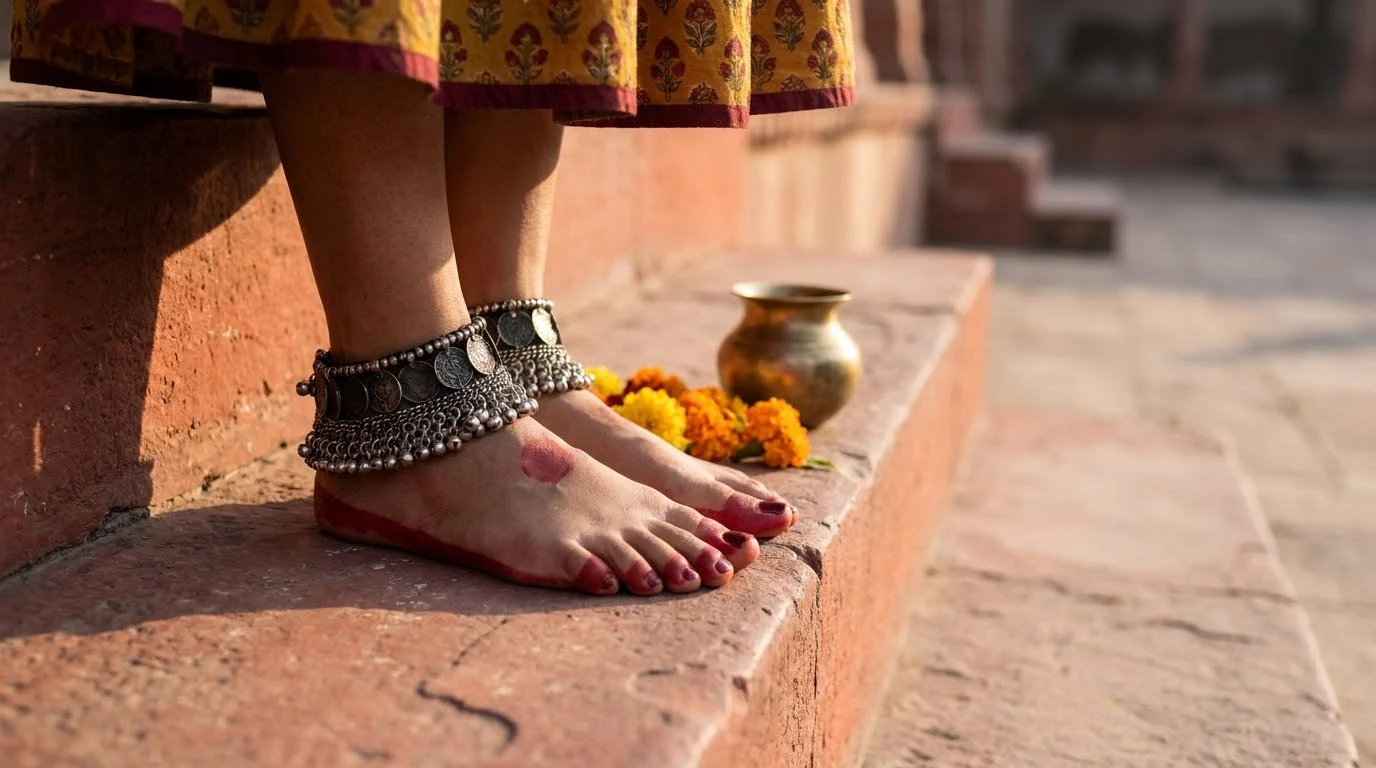
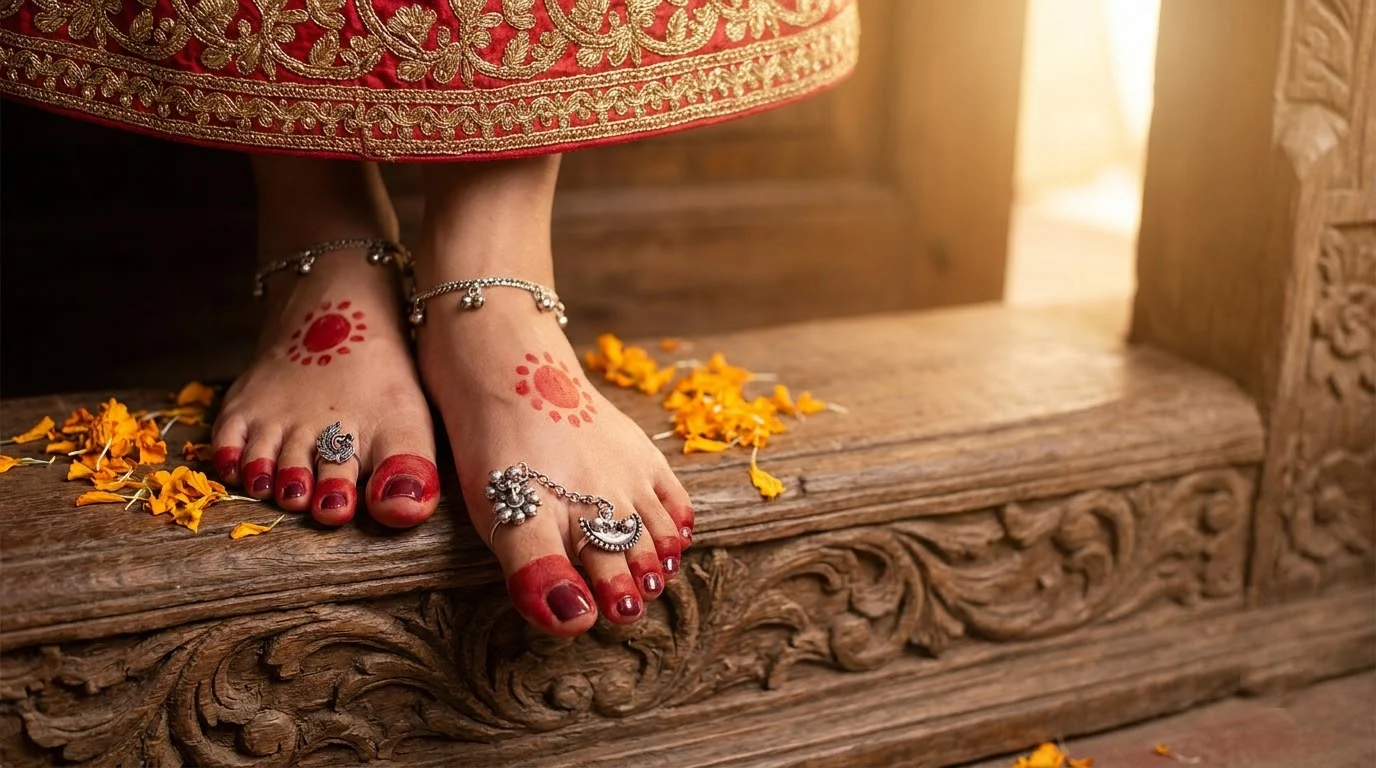
The bichiya is worn on the second toe, the one right next to the big toe, on both feet. This is the most common custom across North and South India. Many families then add more rings:
- Two-toe or three-toe sets: rings on the second, third and sometimes fourth toes, often in a matching design.
- Five-finger bichiya: rings for every toe, popular with brides in parts of Rajasthan and Bihar.
- Angutha (thumb toe) ring: a broader ring for the big toe, worn in some regions as part of a bridal set.
The little toe is usually left bare. If you are not sure which custom your family follows, ask the elders: in our experience, every household has its own small variation, and that is part of the charm.
Why is bichiya worn? Tradition and belief
In Hindu tradition, the bichiya is one of the solah shringar, the sixteen adornments of a bride, alongside sindoor, mangalsutra, bangles and payal. It is put on during or just after the wedding and marks a woman as married, much like the mangalsutra.
Bichiya are traditionally made in silver, not gold. A widely held belief is that gold, associated with Goddess Lakshmi, should not be worn below the waist, so feet are adorned with silver or silver-tone jewellery. This is why payal and bichiya are almost always silver in colour.
You will also read that a bichiya presses a point on the second toe that is linked to health. This idea comes from traditional belief and acupressure, not from medical research, so we prefer to describe it as tradition rather than a health benefit. Wear a bichiya because you love it and what it stands for.
A bichiya is the smallest piece in a bride's shringar, and the one she wears the longest.
Can unmarried girls wear bichiya?
Traditionally the bichiya is reserved for married women, and many families still follow that custom. Fashion has moved on, though: toe rings are now worn by college girls, on holidays and with western outfits, especially lighter, playful designs. If you are unmarried and your family follows the custom, choose a fashion toe ring with a modern motif, or wear one on a toe other than the second toe.
18 bichiya designs every woman should know
Here are 18 bichiya and toe ring designs from the Keyura Jewellery collection, grouped into four families. Every piece below is in stock at the time of writing and starts at just ₹99 a pair.
Simple bichiya designs for daily wear
If you wear your bichiya every day, simple is best. Low, smooth designs do not catch on socks, bedsheets or sarees, and they are easy to walk in.
1. The silver-plated floral bichiya. A small flower on a slim band in bright silver tone. The classic everyday pair.
2. The small oxidised flower bichiya. A tiny flower in blackened silver tone, so light you forget you are wearing it.
3. The oxidised granulated dome bichiya. A small dome covered with fine silver granules, a design seen in old village jewellery.
4. The oxidised filigree flower bichiya. Open filigree petals that look delicate but sit flat on the toe.
5. The oxidised leaf bichiya. A single leaf curving around the toe. Minimal and very wearable.
Shop simple bichiya for daily wear
Shop all →


Oxidised bichiya designs
Oxidised (blackened) silver tone is the most loved finish for toe rings today. It looks traditional, hides everyday wear well and goes with every colour of alta, nail paint and saree border. If you like this look, our guide to oxidised jewellery shows how to pair it with the rest of your outfit.
6. The oxidised carved bichiya. A finely carved top in blackened silver tone, a little bolder than a daily pair.
7. The oxidised rose bichiya. A carved rose, romantic and pretty with summer sandals.
8. The oxidised lotus leaf bichiya. A lotus-leaf motif, a nod to the sacred lotus of Indian art.
9. The oxidised crown bichiya. A small crown-shaped top that looks regal on the second toe.
10. The oxidised ribbed leaf bichiya. A ribbed leaf with a strong texture that catches the light.
11. The oxidised crescent moon bichiya. A crescent moon, a favourite for brides who love a celestial touch.
12. The small oxidised floral bichiya set. A neat, petite floral set that suits narrow feet and small toes.
Shop oxidised bichiya
Shop all →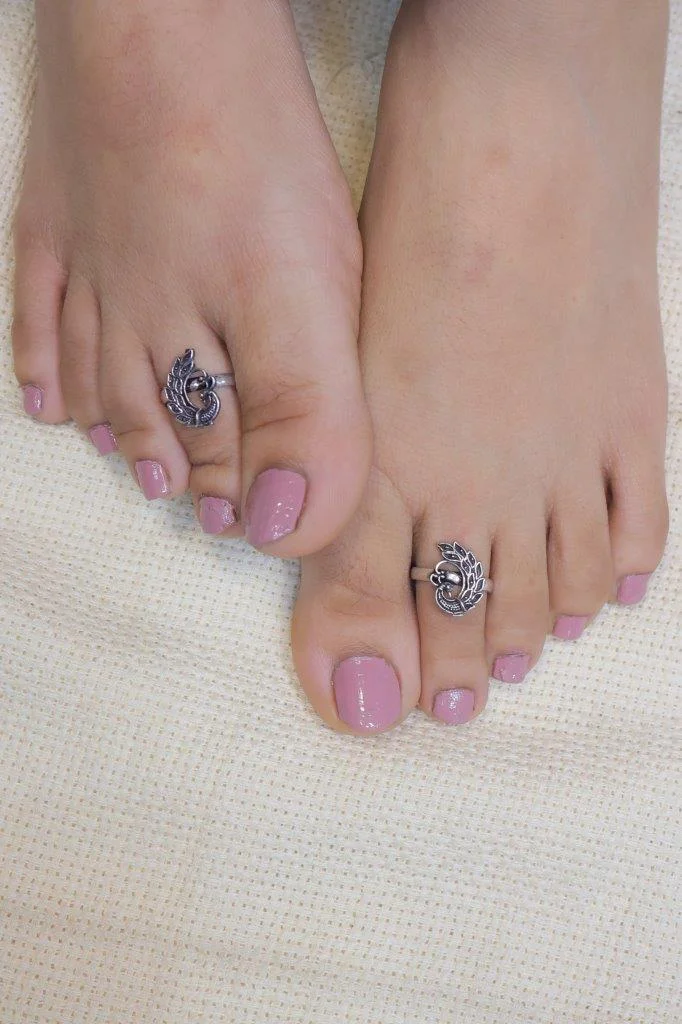 New
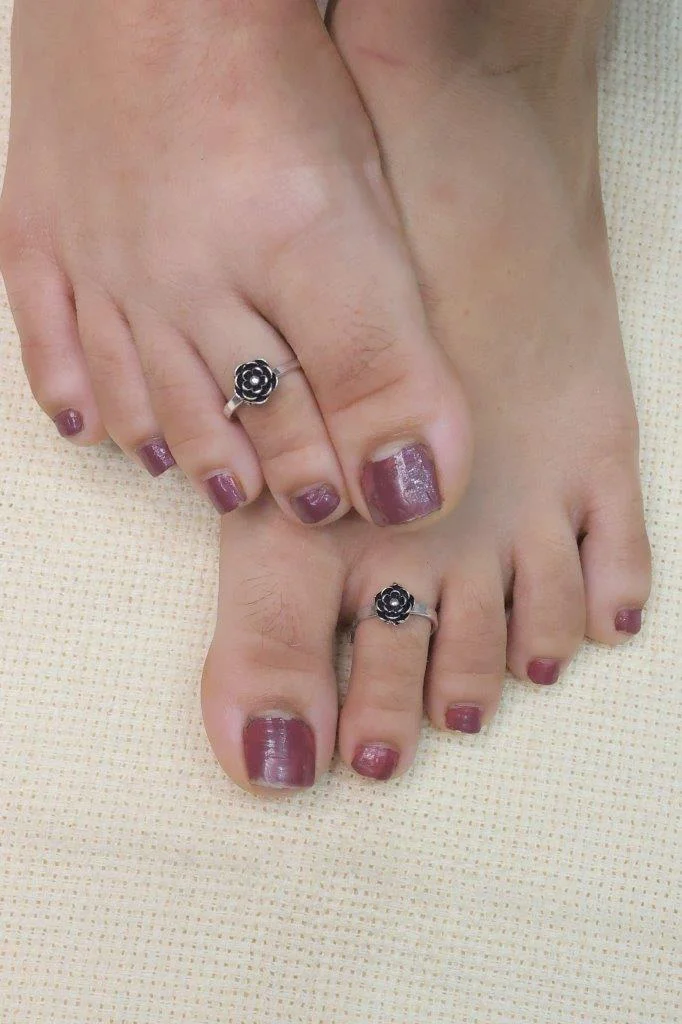
 New

 New
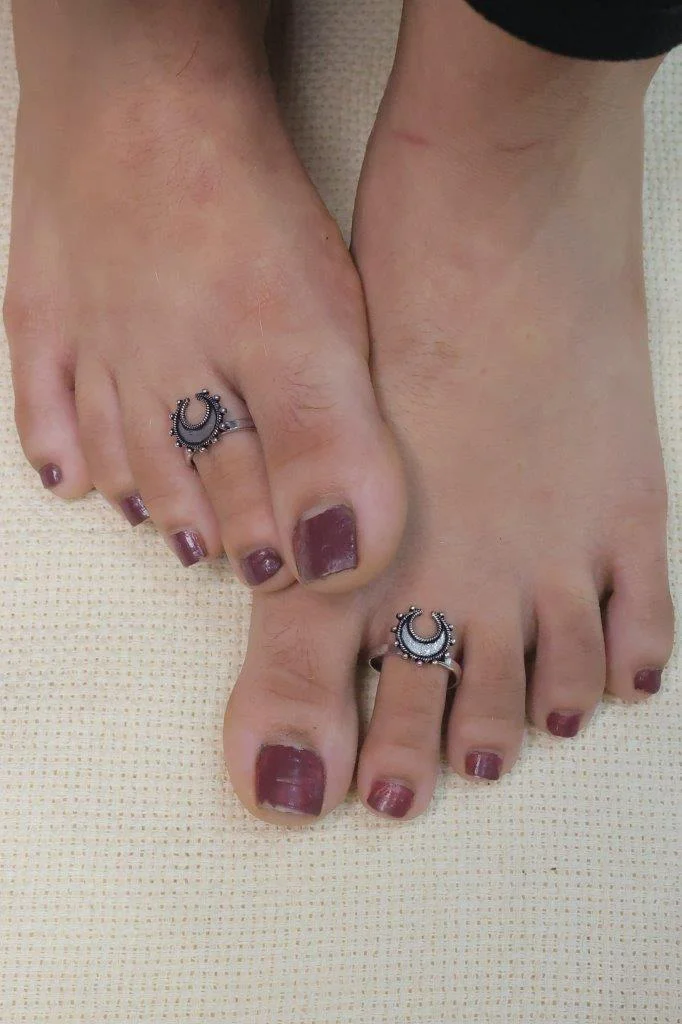 New
 New
Stone-set and colourful bichiya
A touch of colour on the toe is lovely for festivals, Karva Chauth and weddings. Choose a colour from your saree border or your mehendi outfit.
13. The kundan stone bichiya. A kundan-style stone in a silver-tone setting, festive and bridal.
14. The amber stone bichiya. A warm amber stone that looks beautiful with red and maroon outfits.
15. The coloured stone star bichiya. A star-shaped cluster of coloured stones, playful and bright.
16. The oval stone bichiya with beaded collet. An oval stone framed by a beaded rim, a classic Rajasthani look.
Shop stone-set bichiya
Shop all →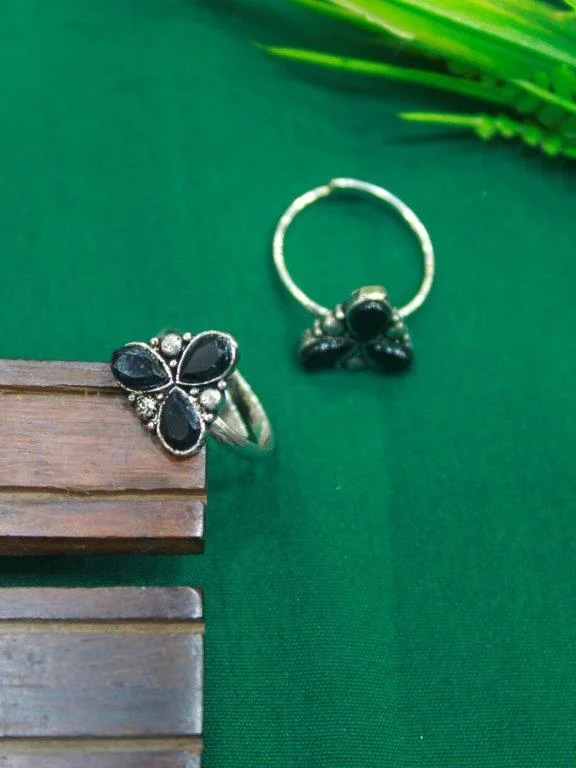

 New
 New
Chain bichiya and bichiya with payal
The bichiya attached payal, also called a toe ring anklet, joins the toe ring to the anklet with a fine chain that runs over the top of the foot. It is one of the most searched bichiya styles and a showstopper with a lehenga.
17. The oxidised chain bichiya with flower ring. A flower toe ring with a fine chain across the foot. Ideal for mehendi and sangeet photographs.
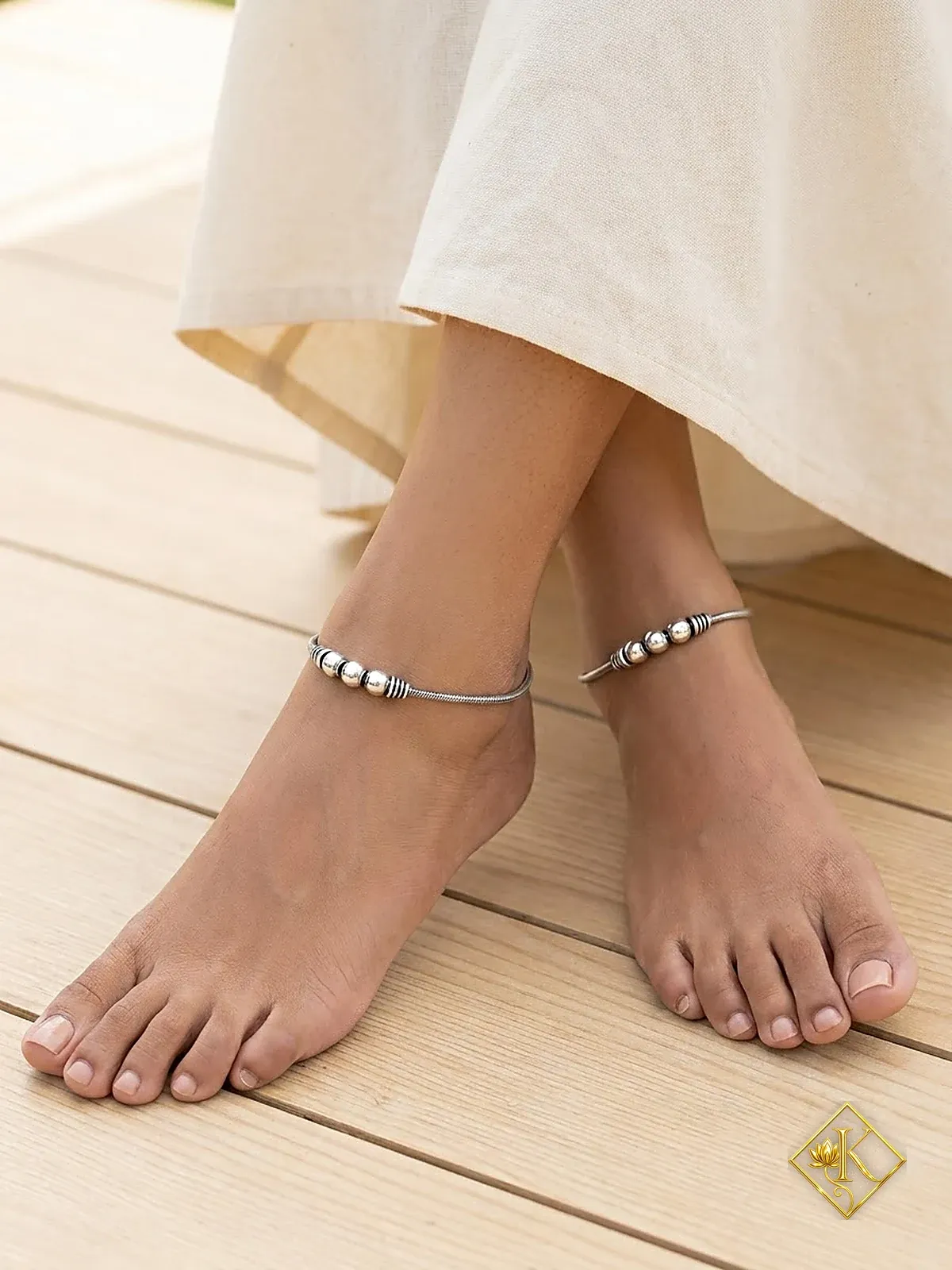
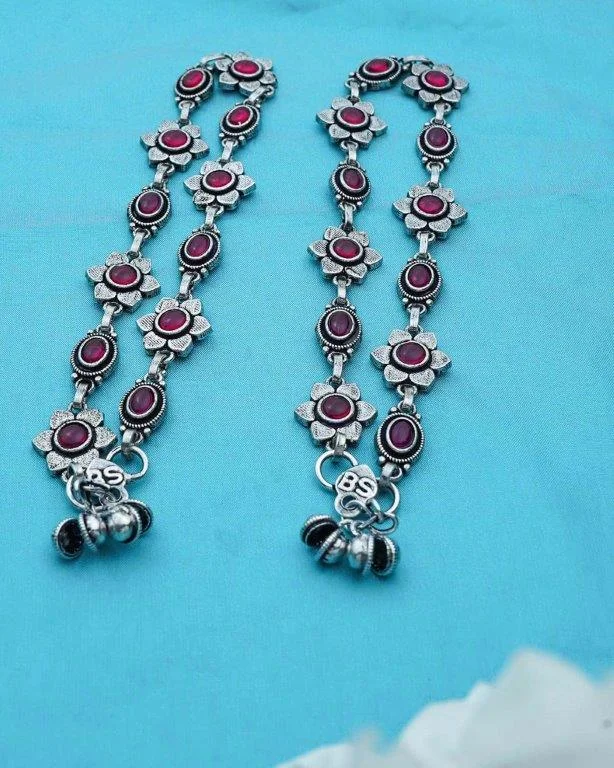
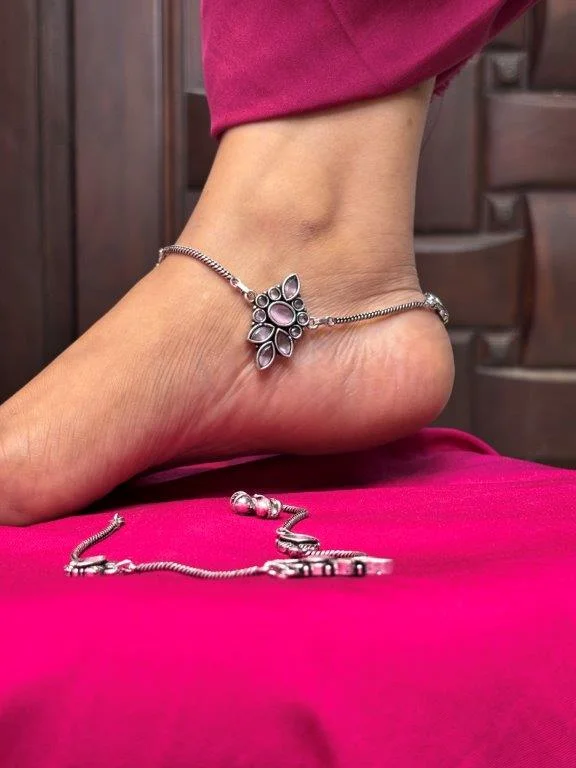
18. Bichiya with a matching payal. Not one piece but a pairing: choose a bichiya and a payal in the same finish, for example an oxidised bichiya with an oxidised ghungroo payal, and the whole foot looks finished.
Shop chain bichiya and payal
Shop all →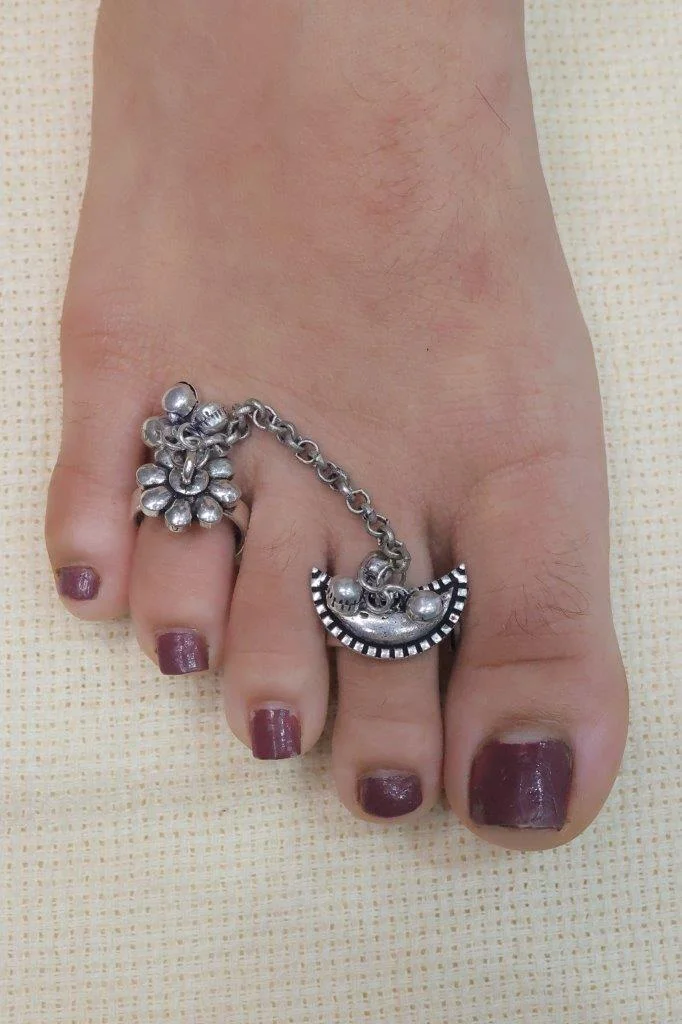 New

 New
 New
How to choose the right bichiya
| If you want… | Choose | Why it works |
|---|---|---|
| Every-day comfort | Simple, low bichiya with a small flower or leaf | Nothing to catch on socks, bedding or saree hems |
| A bridal look | Stone-set or oxidised sets for two or three toes, plus a chain bichiya | Fills the foot and photographs beautifully with alta |
| A fashion look | Crescent moon, star or coloured stone toe rings | Modern motifs that suit sandals and western outfits |
| Small or narrow toes | Petite designs and slim bands | A large top can tilt sideways on a narrow toe |
| Sensitive skin | A smooth inner band, worn for shorter periods at first | Gives your skin time to get used to it |
How to wear a toe ring comfortably
- Adjust it gently. Most of our bichiya have an open, adjustable band. Slide the ring on from the side, then press the ends together with light finger pressure until it is snug but not tight.
- Sit it below the first joint. The ring should rest at the base of the toe, not on the joint, so the toe can bend freely when you walk.
- Do not over-bend. Opening and closing an adjustable ring again and again weakens the metal. Find your size once and leave it.
- Check your footwear. Closed shoes press on the top of the ring. With sports shoes or tight bellies, a flat, simple bichiya is kinder to your toes.
- Feet swell in the heat. On a hot day or a long wedding, loosen the ring a little if it starts to feel tight.
Oxidised Carved Bichiya Toe Ring Set
Description
Specification
Metal
Stones
Care guide
Bichiya price guide: what should you pay?
Pure silver bichiya are priced by weight, so their cost moves with the silver rate and the making charges of your local jeweller. Fashion bichiya in silver-tone and oxidised metal are much more affordable and give you the freedom to own several designs. At Keyura Jewellery, simple bichiya pairs start at ₹99, oxidised and stone-set sets are around ₹119 to ₹149, and chain bichiya are around ₹169. Because we sell directly at factory rates, there is no marketplace commission built into our prices.
Bichiya care: how to keep toe rings looking new
- Your feet meet water, soap and dust every day, so wipe your bichiya with a soft dry cloth after bathing.
- Keep floor cleaners, bleach and detergents away from your toe rings; they dull the finish fastest.
- Store spare pairs in a small zip pouch so they do not scratch other jewellery.
- Oxidised bichiya are meant to look antique; never polish them with a silver-cleaning dip, which strips the black finish.
- Want jewellery that keeps its shine longer for the rest of your look? Read our guide to anti-tarnish jewellery.
Is it bad luck if a bichiya breaks or is lost?
Many families hold beliefs about a lost or broken bichiya, and some replace it the same day. Practically, a bichiya that breaks often is usually being opened and closed too much, or is worn too tight. Choose a well-fitting pair, keep a spare set at home, and you will never have to go without.
Why buy bichiya from Keyura Jewellery?
Keyura Jewellery is a jewellery house based in Dehradun, in the Devbhoomi of Uttarakhand. For years we supplied jewellery to retailers across India, and today we bring the same pieces directly to you at factory rates.
- Designs for every toe and every day, from ₹99 simple pairs to chain bichiya for brides.
- A registered business you can verify: GST invoice with every order, and a verified seller on Amazon and Flipkart.
- Fast dispatch: orders placed before 4 PM IST leave the same day, Monday to Saturday, and reach most of India in 2 to 5 working days.
- Worldwide delivery: tracked shipping abroad, typically 5 to 12 working days, with prices shown in your currency.
Completing a bridal look? Pair your bichiya with a hathphool, a maang tikka and our bridal jewellery sets. For a high-occasion statement, our house Keyura Luxe offers hand-finished pieces, and Shubbushrii, our divine jewellery label, dresses Laddu Gopal, Radha Rani and Mata Rani for festivals.