




 Save
There is a reason oxidised jewellery has become the signature of college corridors, design studios, garba nights and handloom saree weekends across India. It is bold without being loud, traditional without being heavy, and it makes almost any outfit look considered. In this complete guide, the team at Keyura Jewellery in Dehradun explains what oxidised jewellery is, what it is made of, how it differs from German silver and sterling silver, how to style it with sarees and kurtis, and how to keep it looking beautiful for years.
What is oxidised jewellery? The meaning explained
In chemistry, oxidation is a reaction between a metal and oxygen or sulphur that darkens its surface. Silversmiths have used this effect for centuries on purpose: by darkening a piece and then polishing the high points, they create contrast, depth and a lived-in, heirloom look.
In Hindi, oxidised jewellery is often simply called kaali chandi (black silver) or antique silver jewellery. In fashion stores, the term covers necklaces, chokers, hasli, jhumkas, kadas, rings, anklets and nose pins finished in this smoky silver tone.
What is oxidised jewellery made of?
Oxidised jewellery can be made in several ways:
- Brass or alloy with an oxidised silver-tone finish. The most common type in Indian fashion jewellery. Light, strong, affordable and easy to wear every day. This is how our oxidised pieces at Keyura Jewellery are made.
- German silver. Despite the name, German silver contains no silver at all. It is an alloy of copper, nickel and zinc, valued for its silvery colour and durability.
- Oxidised sterling silver (925). Real silver deliberately darkened. Beautiful, but considerably more expensive.
German silver vs oxidised jewellery vs sterling silver
| Oxidised fashion jewellery | German silver | Sterling silver (925) | |
|---|---|---|---|
| Contains real silver? | No | No | Yes, 92.5% |
| Typical base | Brass or alloy | Copper, nickel, zinc | Silver and copper |
| Weight | Light | Light to medium | Medium |
| Price | Most affordable | Affordable | Premium |
| Best for | Daily wear, college, festivals, trends | Daily wear, folk styles | Heirlooms, gifts |
For most everyday dressing, oxidised fashion jewellery and German silver give you the look of antique silver at a fraction of the price, so you can build a whole wardrobe of styles.
Types of oxidised jewellery
Oxidised necklace sets and chokers
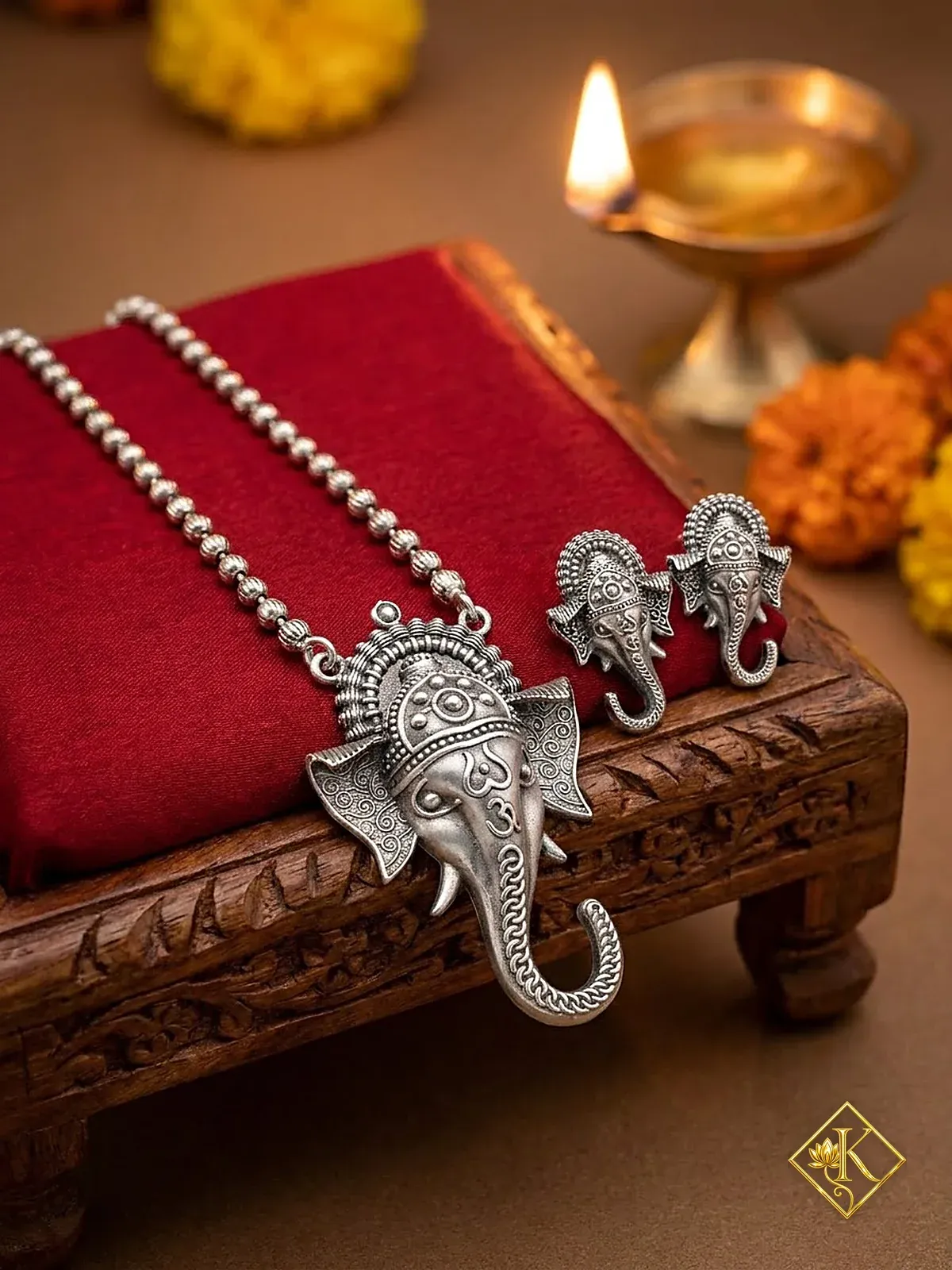
The heart of any oxidised collection. Chokers sit close to the neck and suit boat necks and round necklines; long necklaces and pendant sets suit V-necks and kurtas. Folk motifs such as elephants, peacocks, parrots, Ganesha and temple shields are the most loved designs.
Shop oxidised necklace sets
Shop all →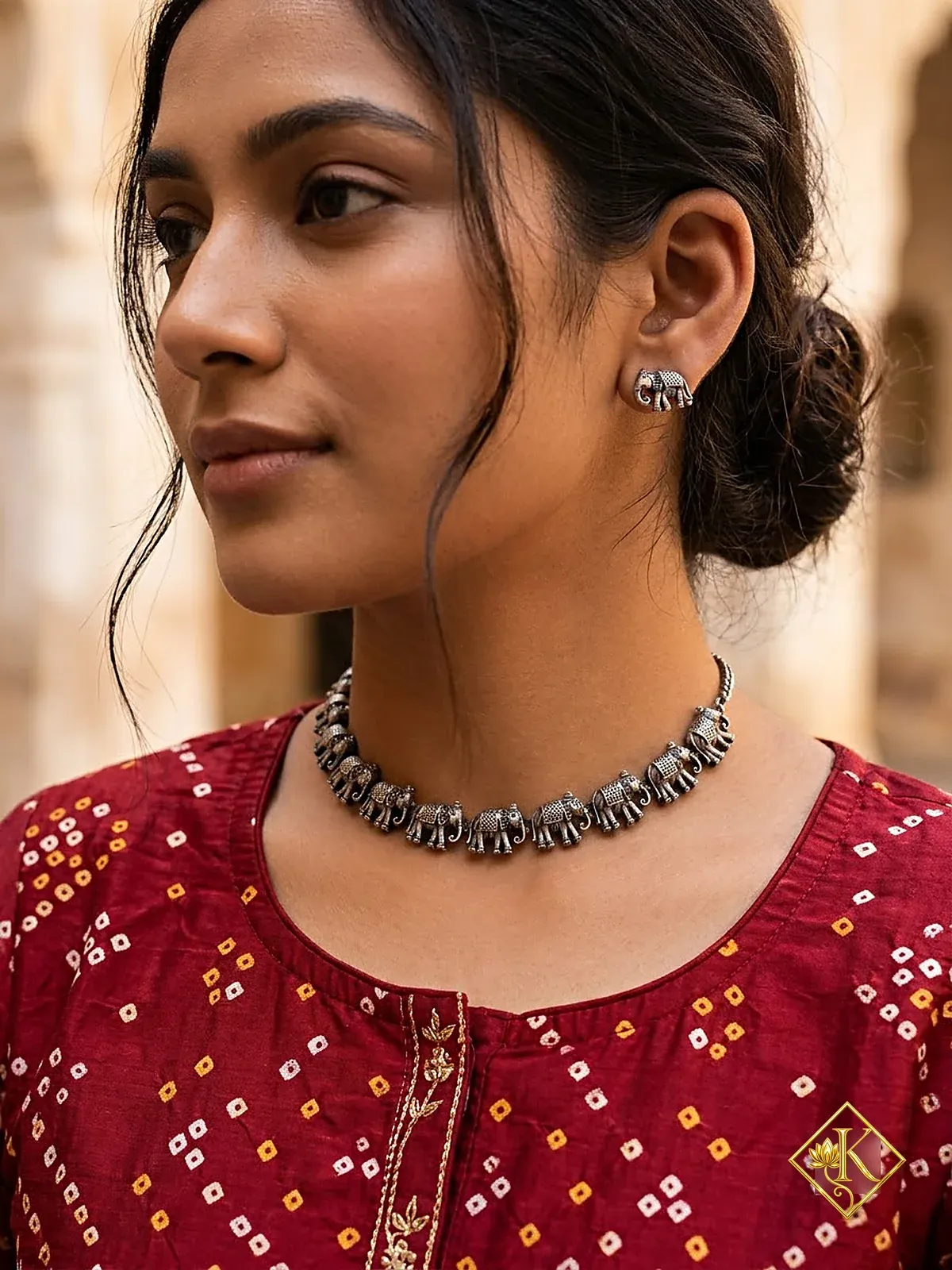


Oxidised hasli necklaces
The hasli is a rigid, collar-like necklace from Rajasthan and North India, traditionally worn by women in rural communities. In oxidised silver tone it has become a style statement, especially with cotton sarees and kurtas. Explore our hasli necklaces.
Oxidised earrings and jhumkas
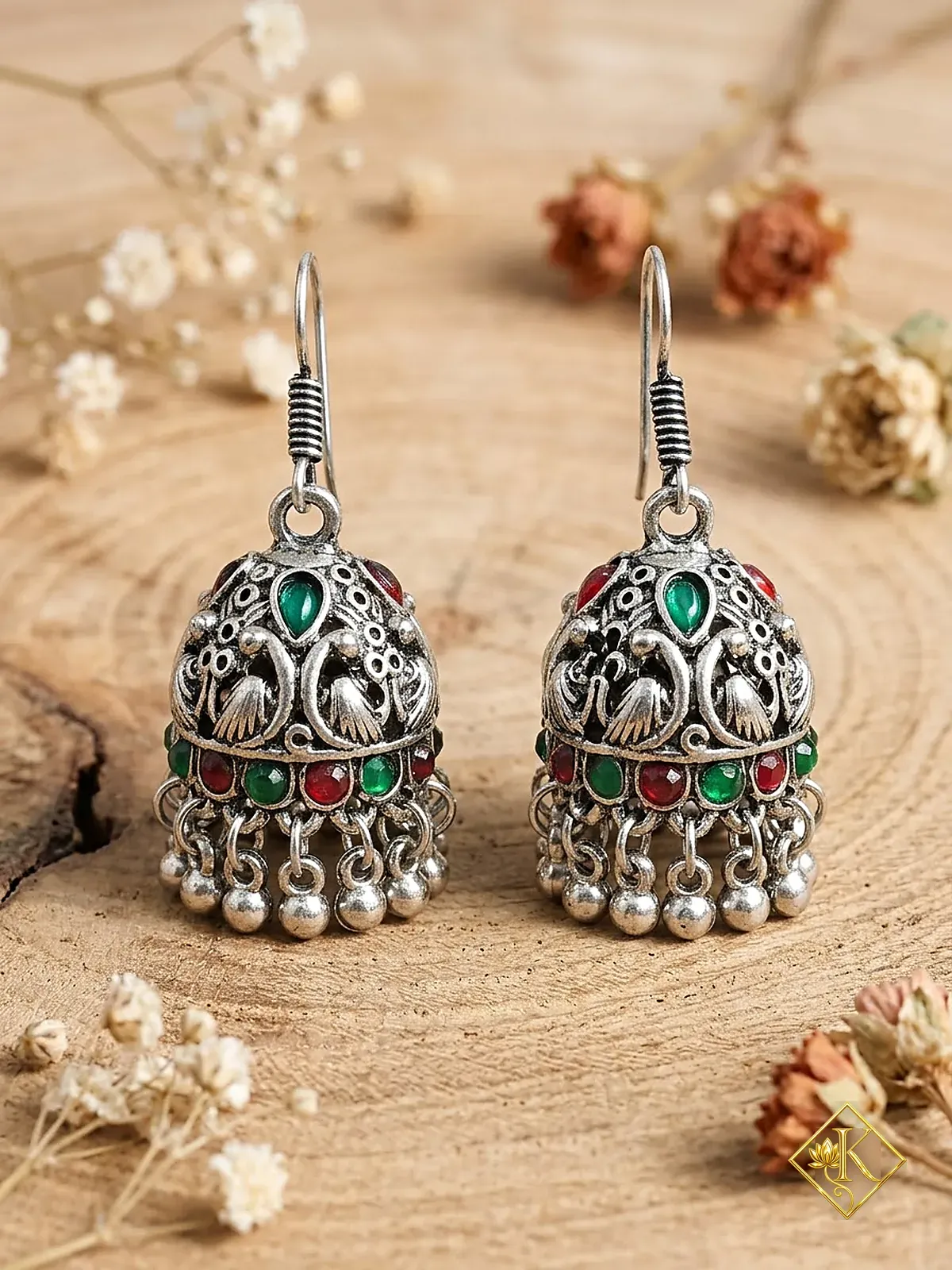
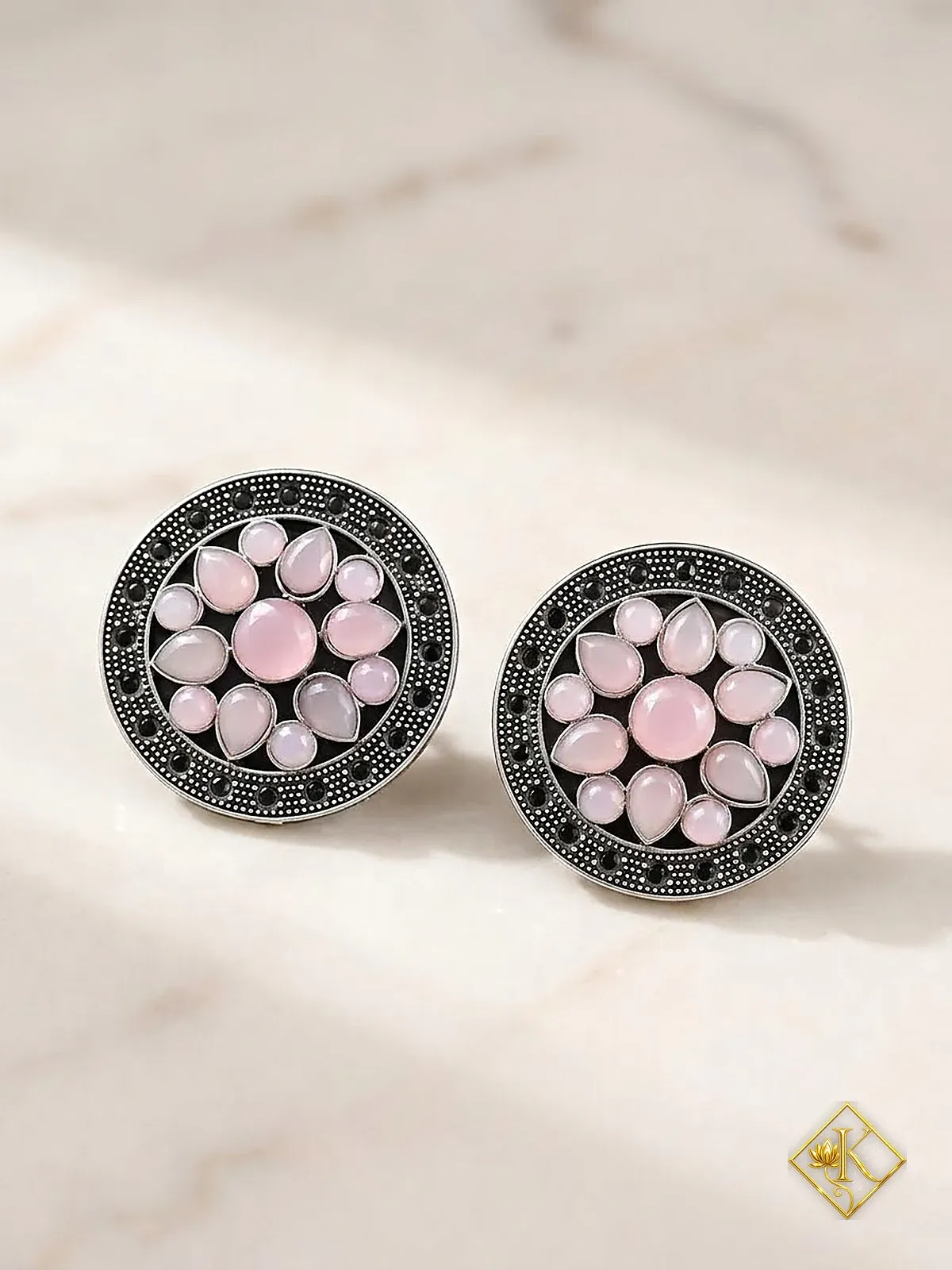
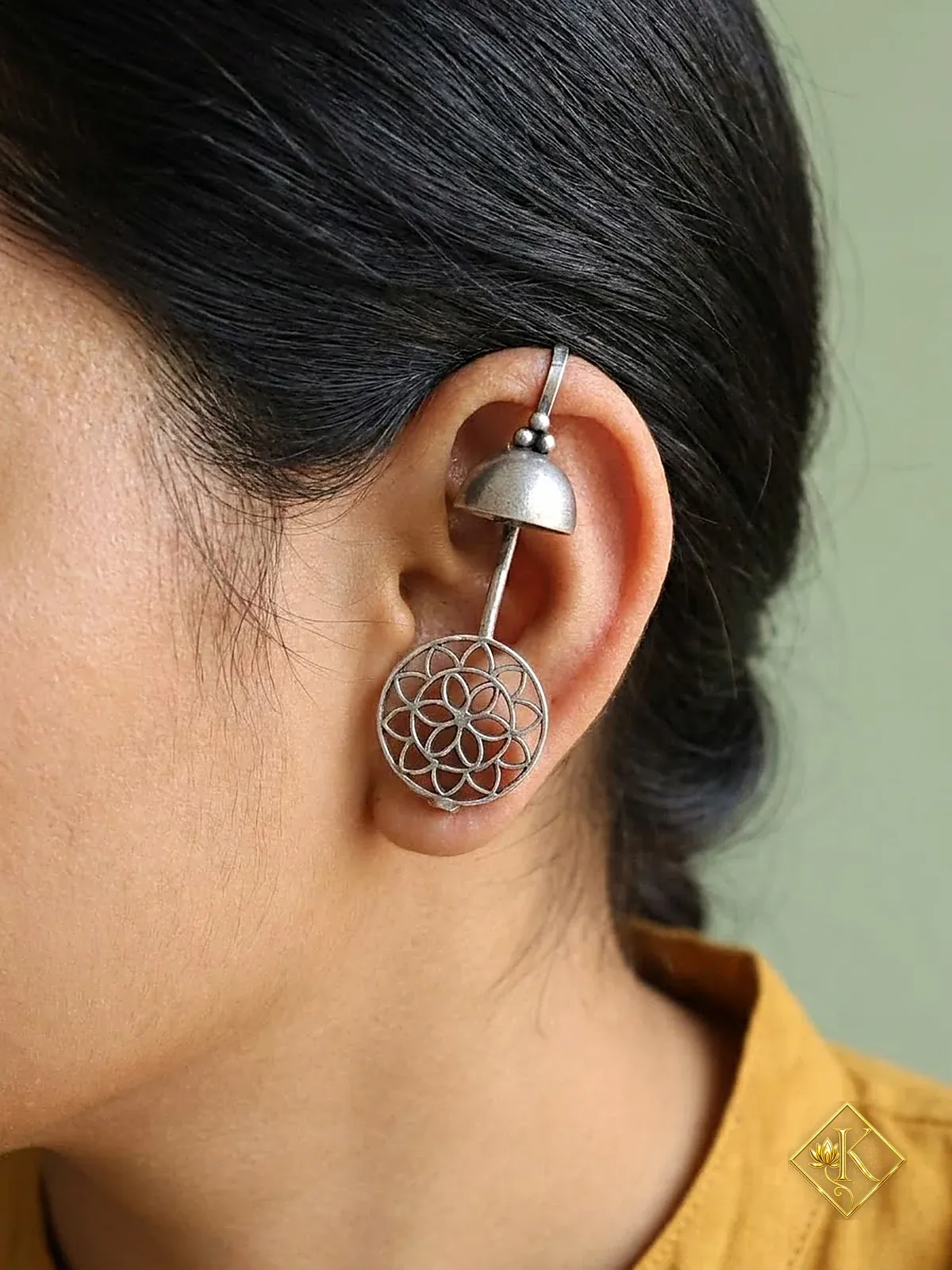
From tiny studs and ear pins to statement jhumkas and Kashmiri chain earrings, oxidised earrings are the easiest way to begin. See our guide to 25 jhumka designs for inspiration.
Shop oxidised earrings
Shop all →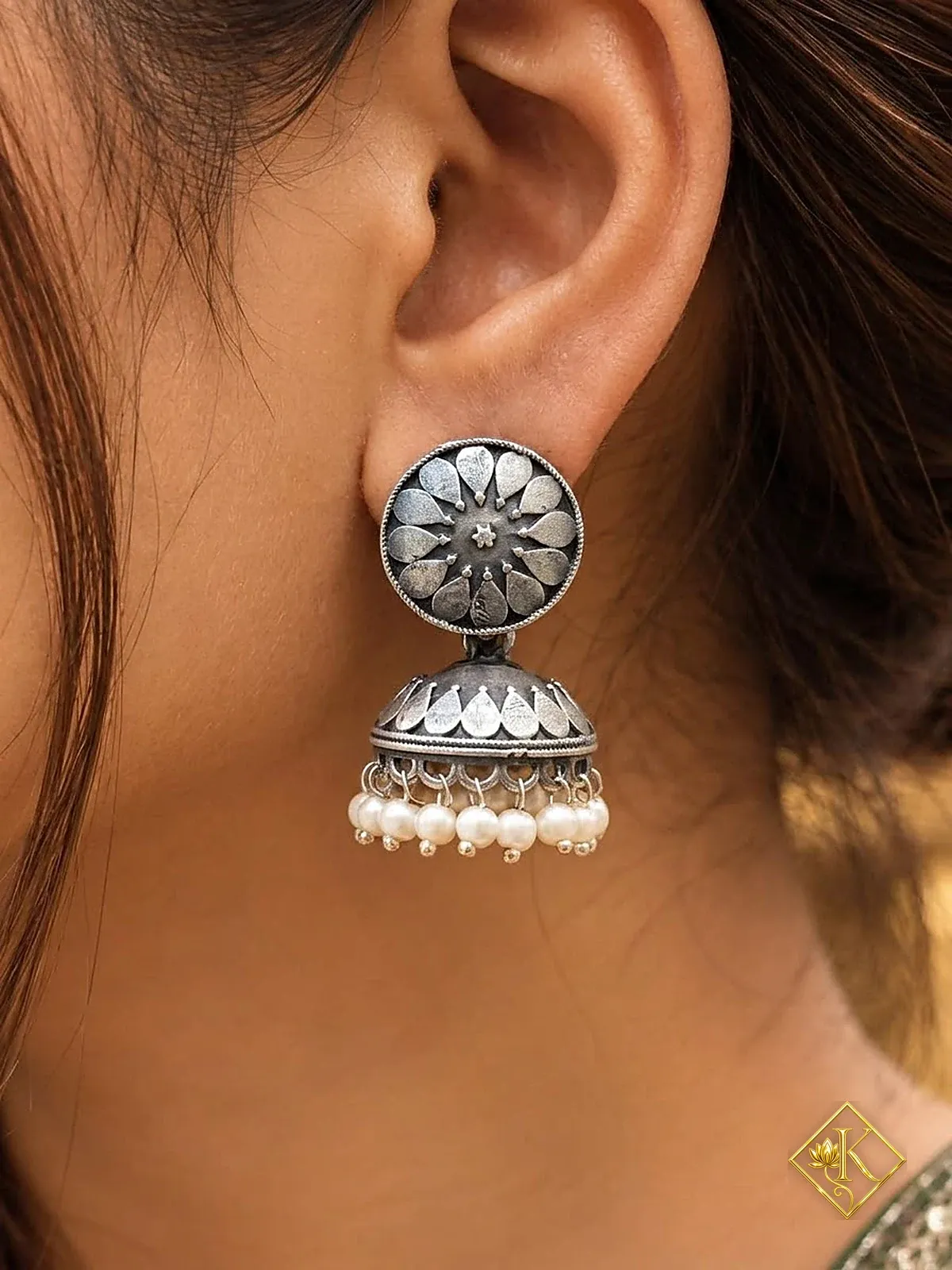


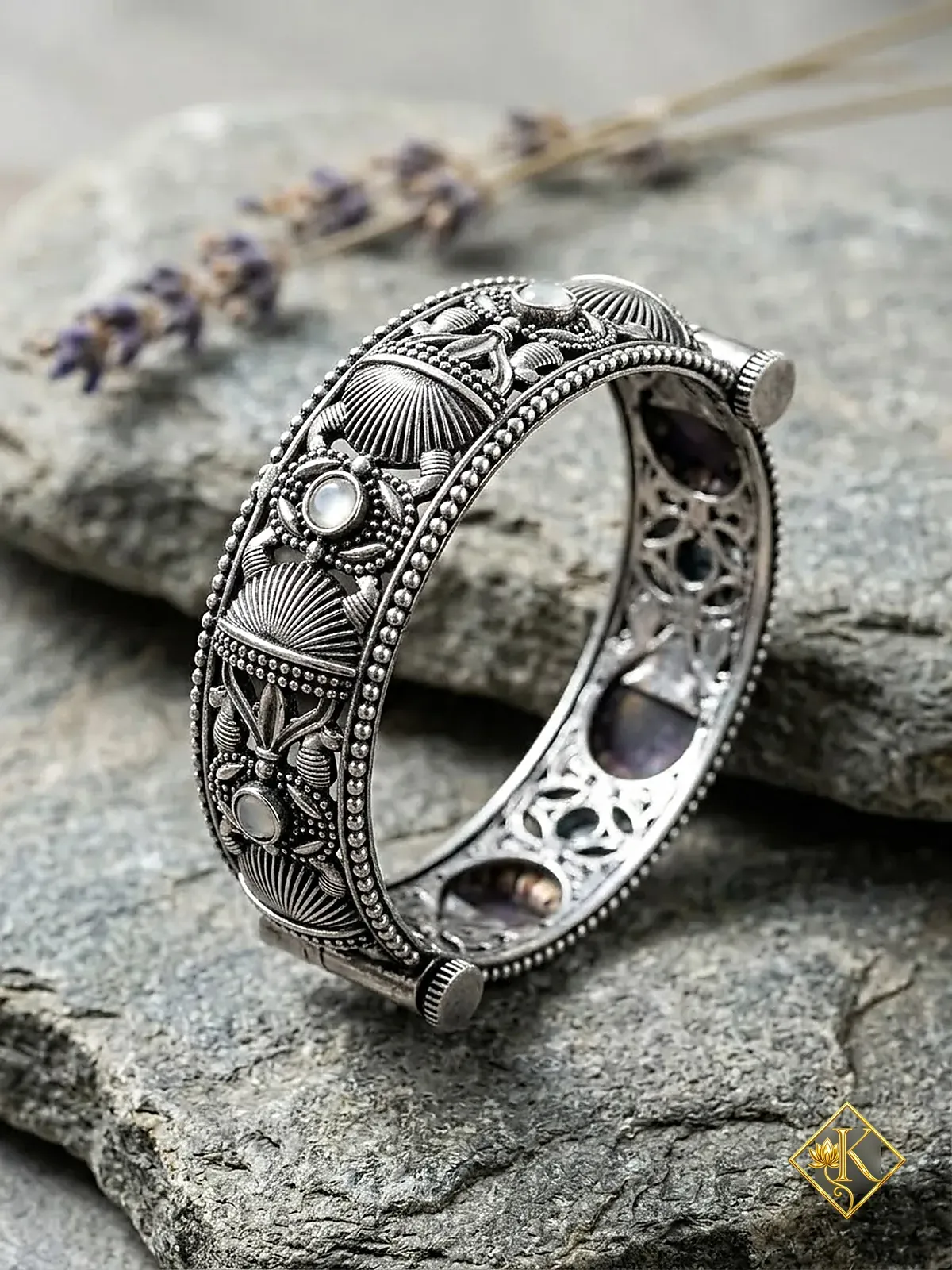
Oxidised bangles, kadas and cuffs
A single wide oxidised kada can carry an entire look. Stack slim bangles for a boho feel, or choose an openable kada with coloured stones for festive days.
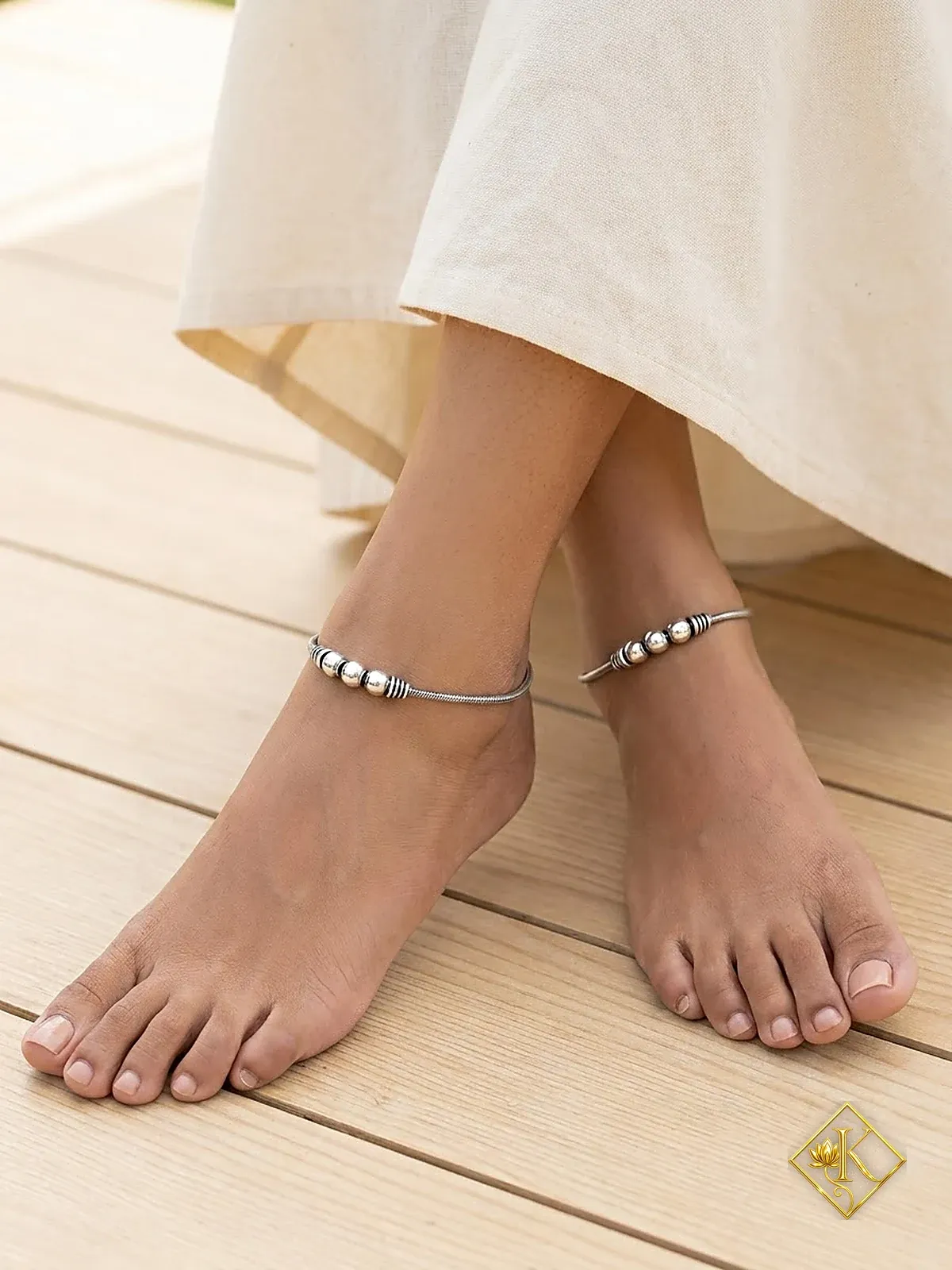
Oxidised rings, anklets and payal
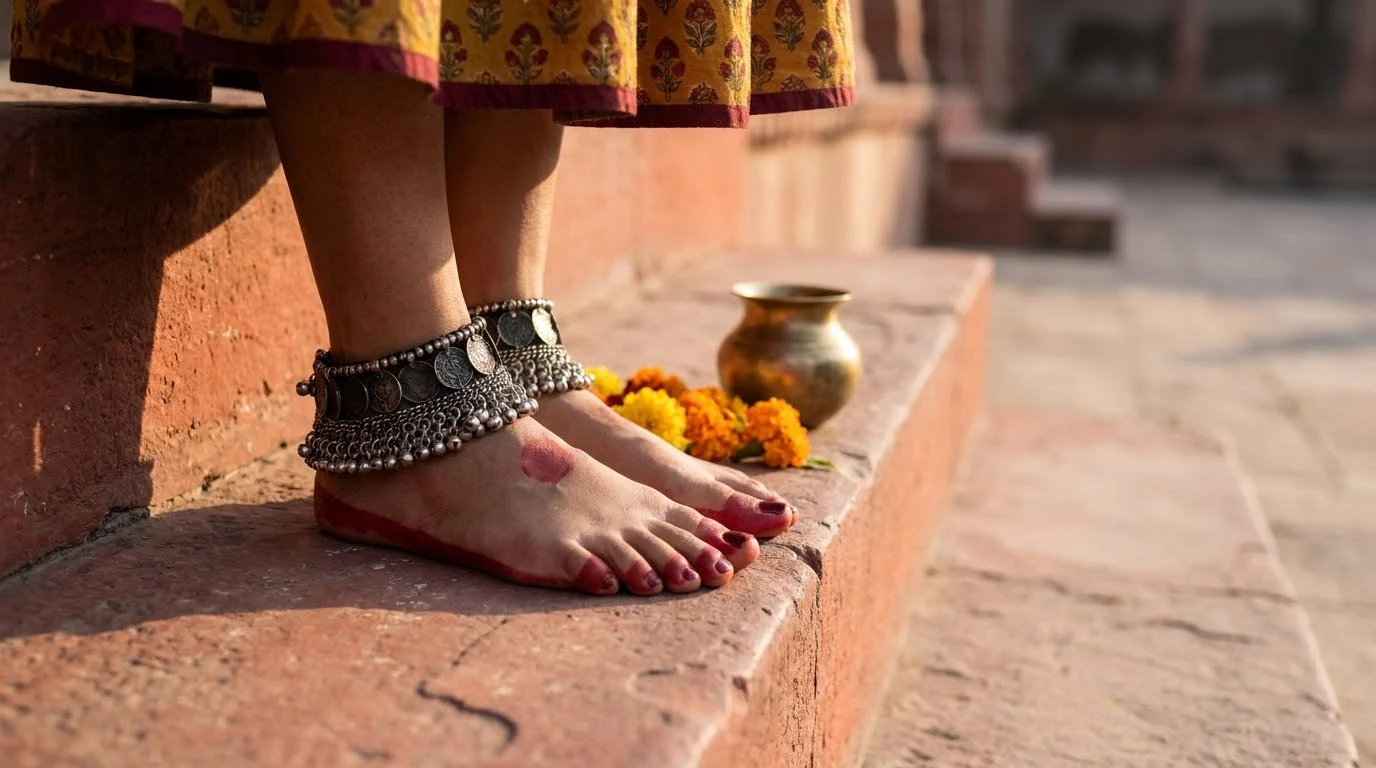
Adjustable oxidised rings and silver-tone payal pairs finish the look, and they are among the most affordable pieces in any collection.
Shop oxidised kadas, rings and payal
Shop all →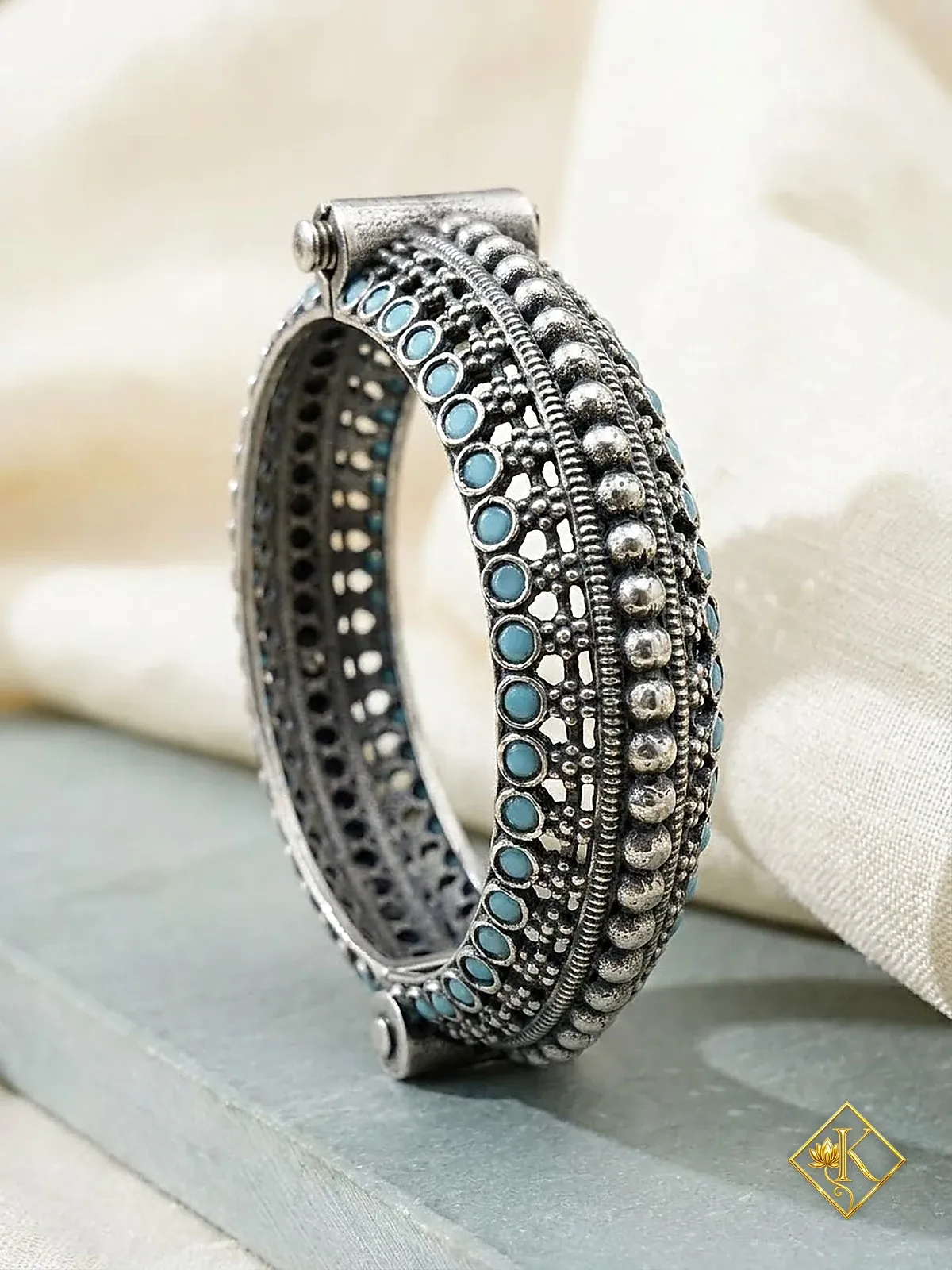



How to style oxidised jewellery
Oxidised jewellery with a saree
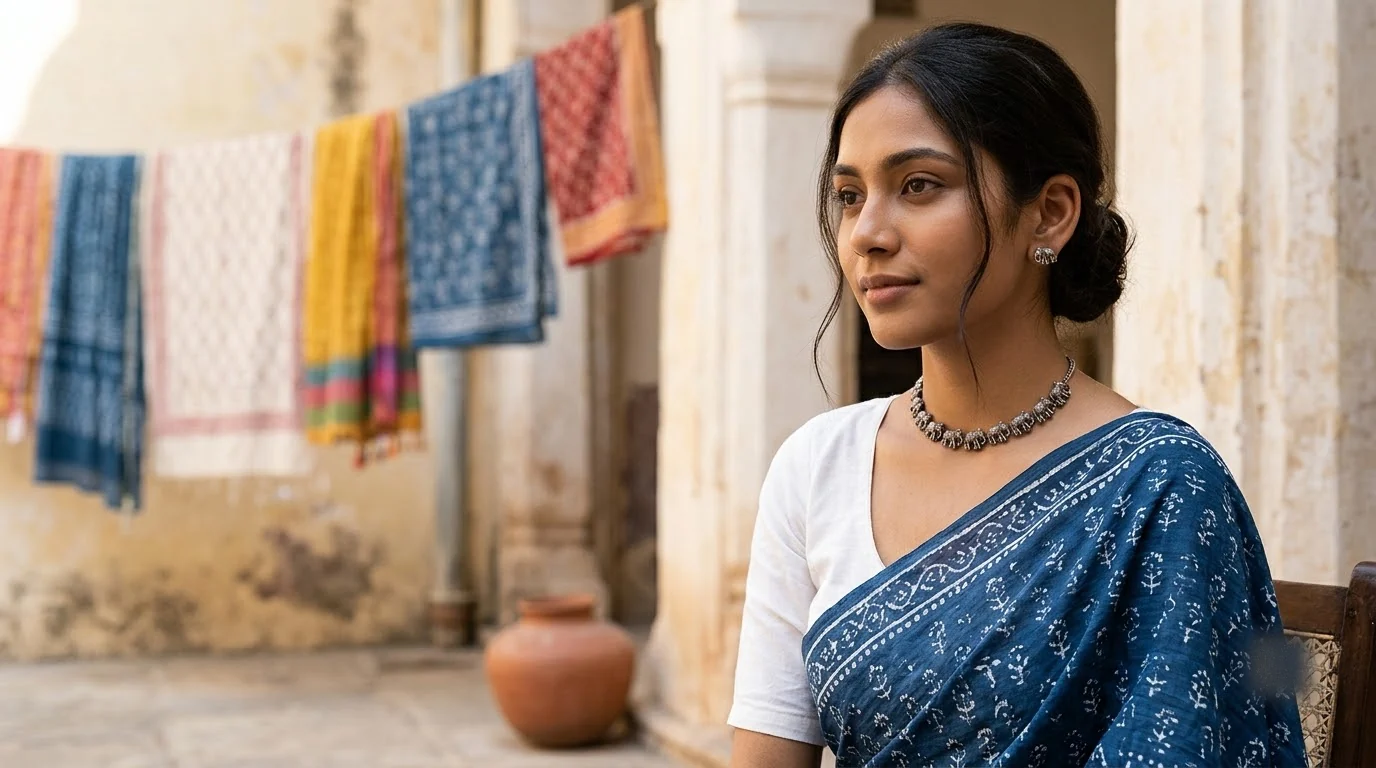
Oxidised jewellery is at its most beautiful with handloom: cotton, khadi, linen, ikat, block print, Kalamkari and chikankari. Which saree colours work best? Almost all of them, but indigo, black, white, mustard, rust, maroon, bottle green and pastel pink are classics. With a black saree, a bold oxidised choker or hasli looks striking; with a pink or green saree, add an oxidised set with coloured stones that pick up the shade.
Oxidised jewellery with a kurti
With a white or chikankari kurti, a long oxidised pendant necklace and jhumkas look effortless. With a short kurti and jeans, try statement oxidised earrings and a single kada. With a black kurti, layer two necklaces of different lengths.
Oxidised jewellery for Navratri and garba
Navratri is oxidised jewellery's favourite season. Pair a heavy oxidised choker, big jhumkas, a kada stack and a ghungroo payal with a mirror-work chaniya choli, and you are ready to dance till dawn. Lightweight pieces matter here, because you will be moving all night.
Oxidised jewellery with western outfits
A slim oxidised choker with a black dress, or oxidised studs with a crisp white shirt, gives western outfits an unmistakably Indian edge. Keep it to one statement piece.
Oxidised jewellery does not ask the outfit to be grand. It makes the simplest cotton saree look like a choice.
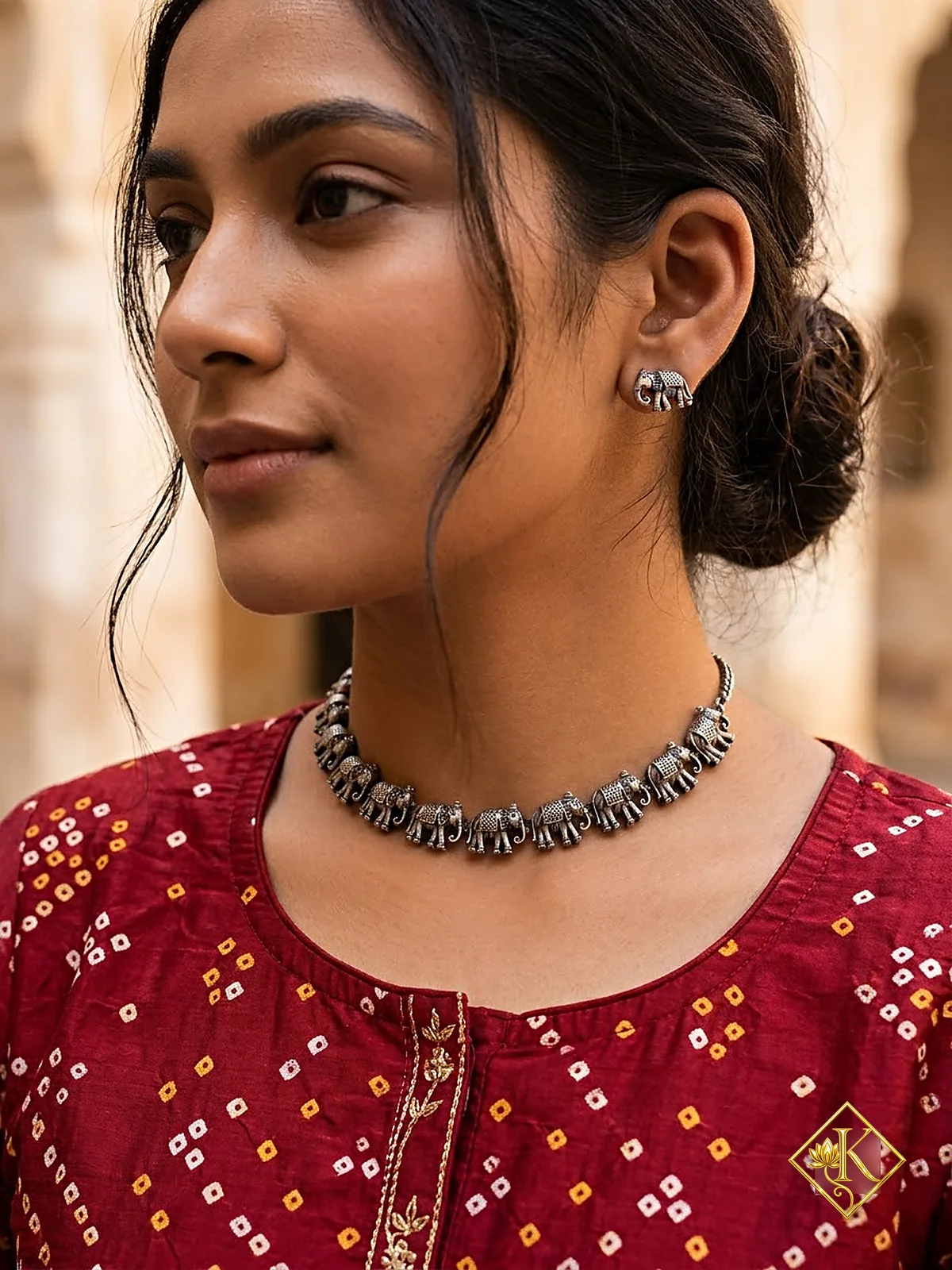
Oxidised Royal Elephant Parade Choker Necklace Set
Description
Specification
Metal
Stones
Care guide
How to clean oxidised jewellery (and why it turns black)
Oxidised jewellery naturally darkens a little more over time, especially in humid weather or if it touches sweat, perfume or water. A little extra darkness is part of its charm. Here is how to keep it clean without stripping the finish:
- Wipe after every wear with a soft, dry cotton or microfibre cloth.
- For dust in the grooves, use a soft, dry toothbrush and brush gently.
- Do not soak it in water, and never use lemon, toothpaste, baking soda or silver dips. These remove the black oxidised layer and can leave the piece patchy.
- If it gets wet, pat it dry immediately and leave it in the air for a while before storing.
How to store oxidised jewellery
- Store each piece in a zip-lock or airtight pouch. Less air means less further oxidation.
- Add a small silica gel sachet to your jewellery box in the monsoon.
- Keep oxidised pieces separate from gold-tone jewellery so they do not scratch each other.
Is oxidised jewellery safe for sensitive skin?
Most people wear oxidised fashion jewellery without any problem. If you have very sensitive skin or a known metal allergy, wear it for shorter periods, keep it dry, and avoid wearing it while sweating heavily. If you notice irritation, stop wearing the piece. For sensitive ears, our anti-tarnish earrings are a good everyday alternative.
Oxidised jewellery price guide
At Keyura Jewellery, oxidised rings and anklets start at around ₹129, oxidised earrings and slim bangles at around ₹149, and oxidised necklace sets are typically between ₹280 and ₹500. Because we sell directly from our workshop at factory rates, there are no middlemen and no marketplace commission in our prices, which means you can build a full oxidised wardrobe for less than you might expect.
Why buy oxidised jewellery from Keyura Jewellery?
Keyura Jewellery is a jewellery house based in Dehradun, in the Devbhoomi of Uttarakhand. For years we have designed and supplied jewellery to retailers across India; now we bring the same pieces directly to you at factory rates.
- Hundreds of oxidised designs: necklaces, chokers, hasli, earrings, jhumkas, kadas, rings and payal.
- Verified and registered: GST invoice with every order, and a verified seller on Amazon and Flipkart.
- Quick dispatch: orders placed before 4 PM IST leave the same day, Monday to Saturday, and reach most of India in 2 to 5 working days.
- Worldwide delivery: tracked international shipping, typically 5 to 12 working days, with prices in your currency.
Looking for something more formal? Our statement house Keyura Luxe offers rhodium-plated pieces with fine cubic zirconia. For your home temple, Shubbushrii, our divine jewellery label, makes shringar for Laddu Gopal, Radha Rani and Mata Rani.