↔ Drag or swipe · Double-click to fullscreen
| Metal | Brass |
| Stone Type | Turquoise |
| Weight (g) | 9.00 |
| Colour | Aqua-blue |
| Occasion | Daily Wear |
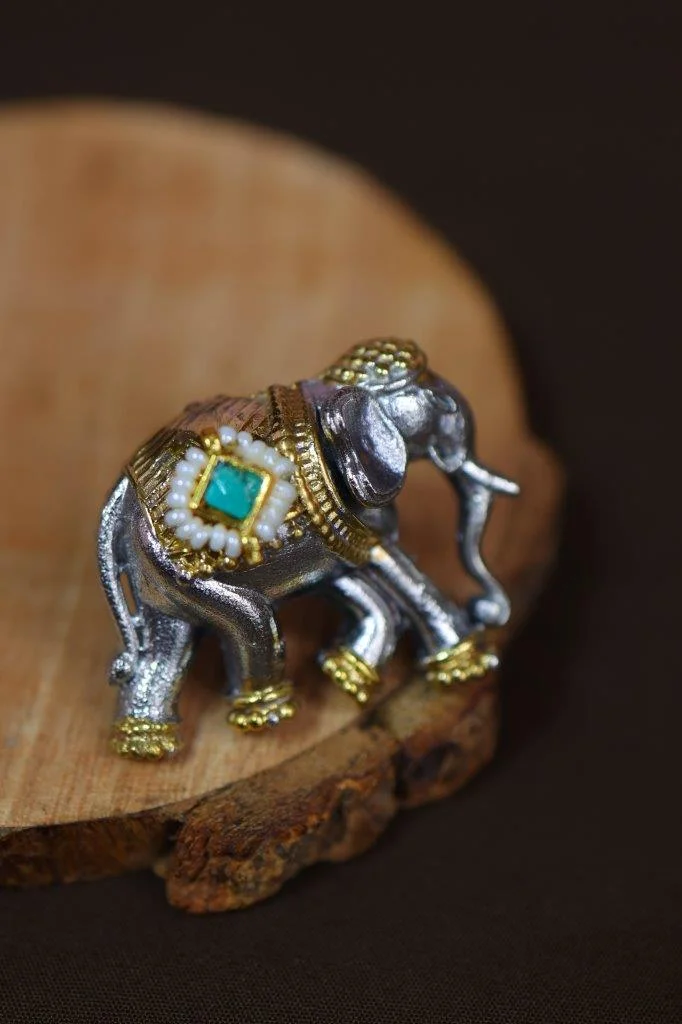
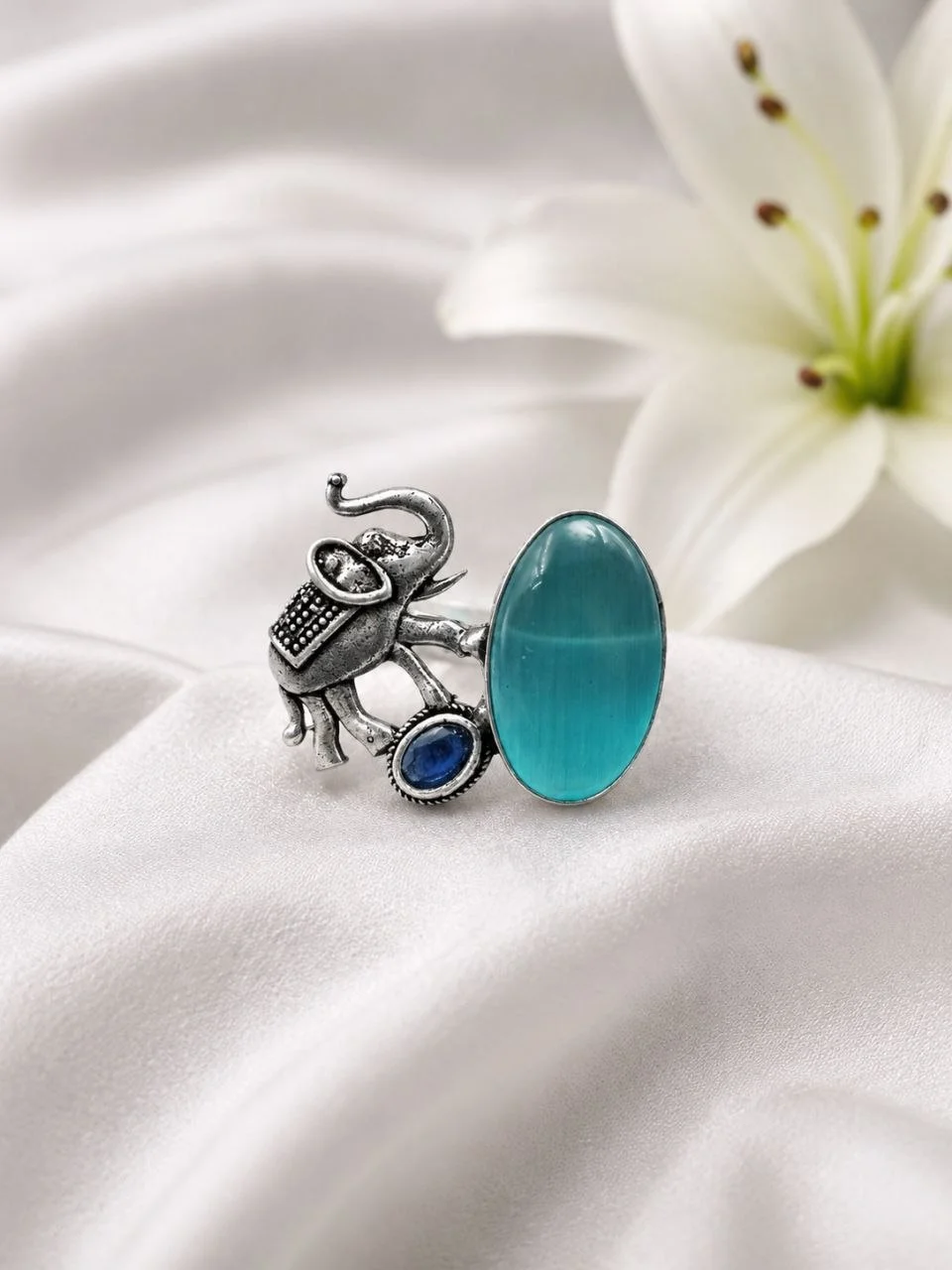
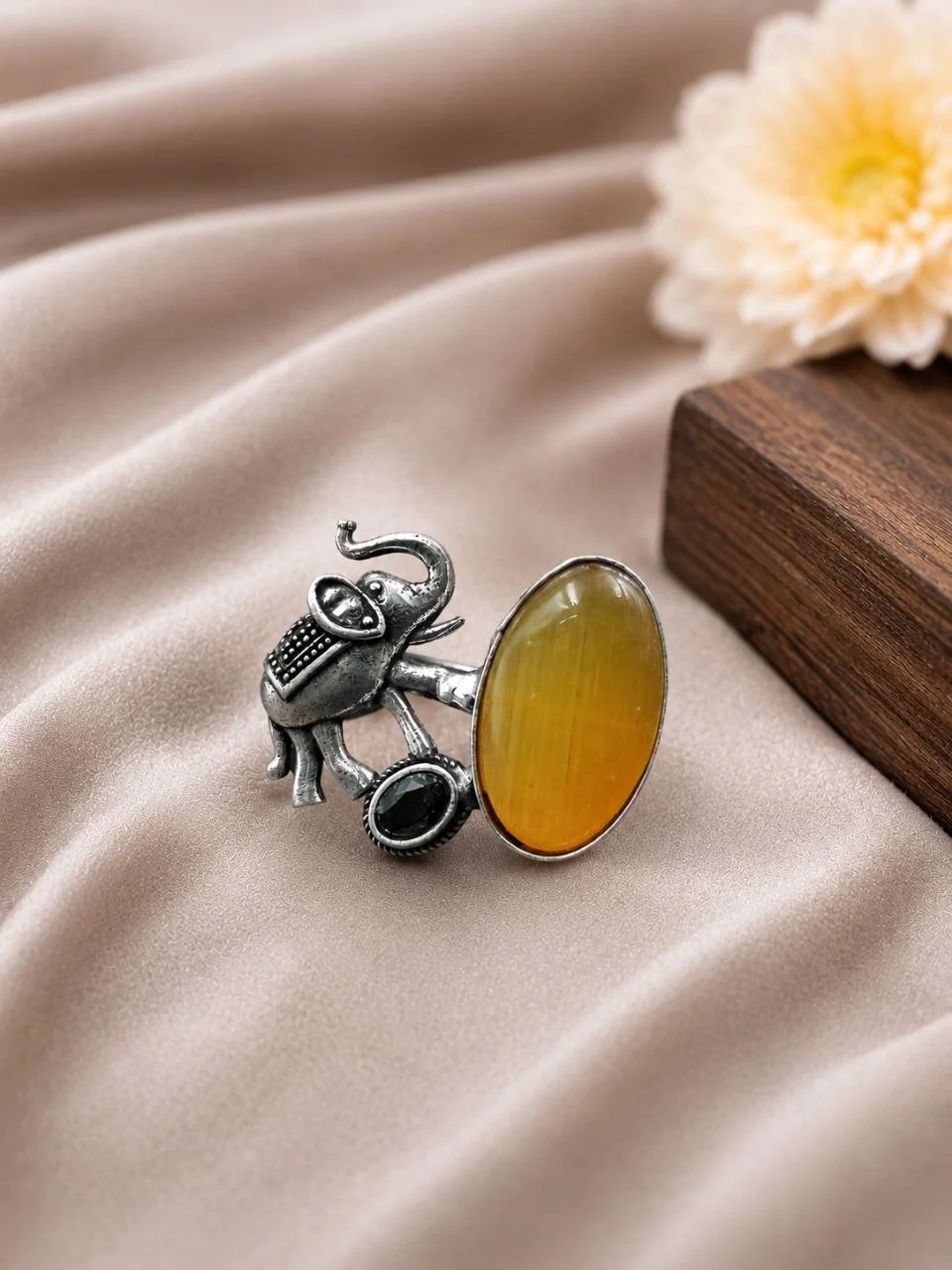
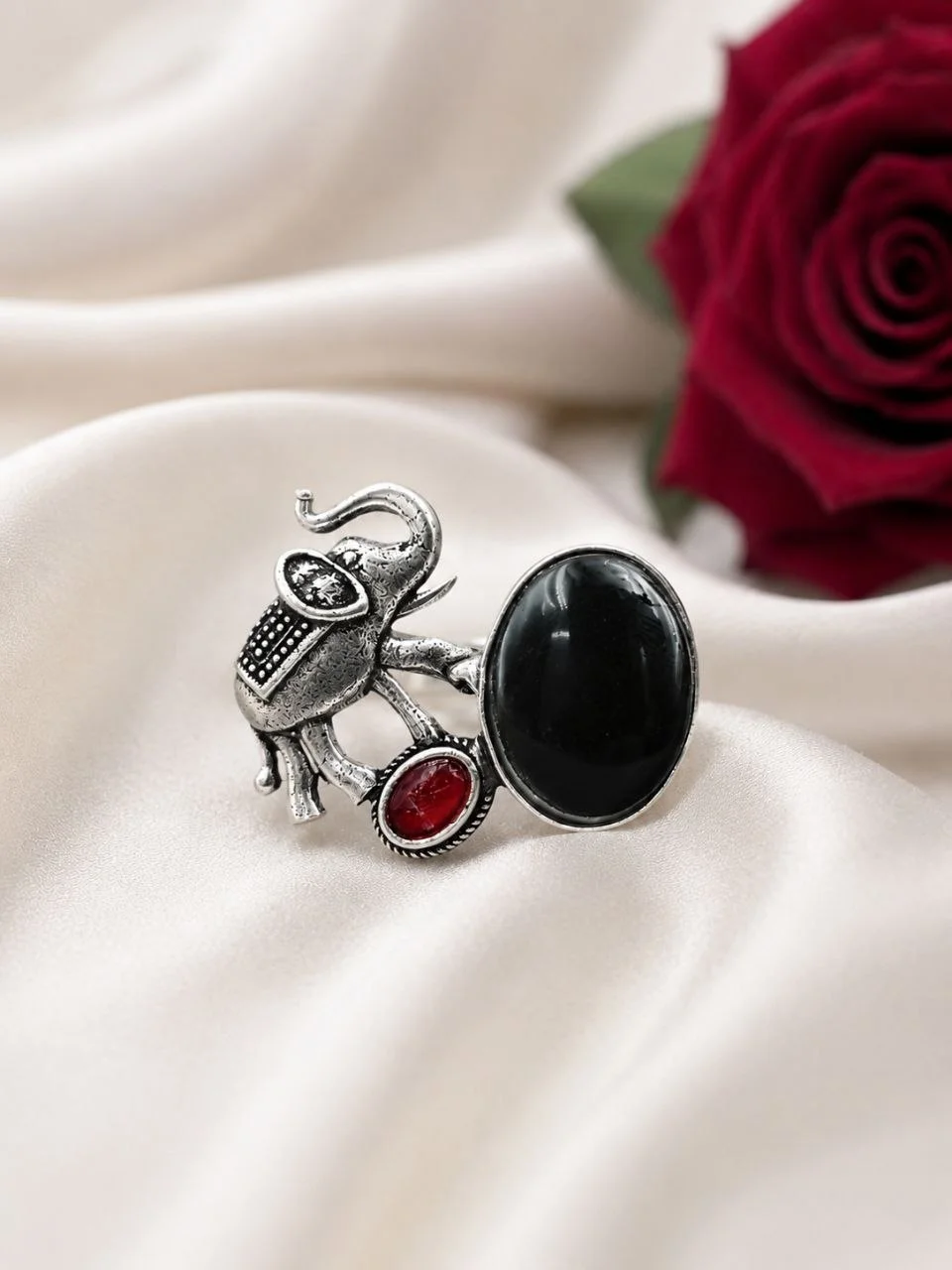
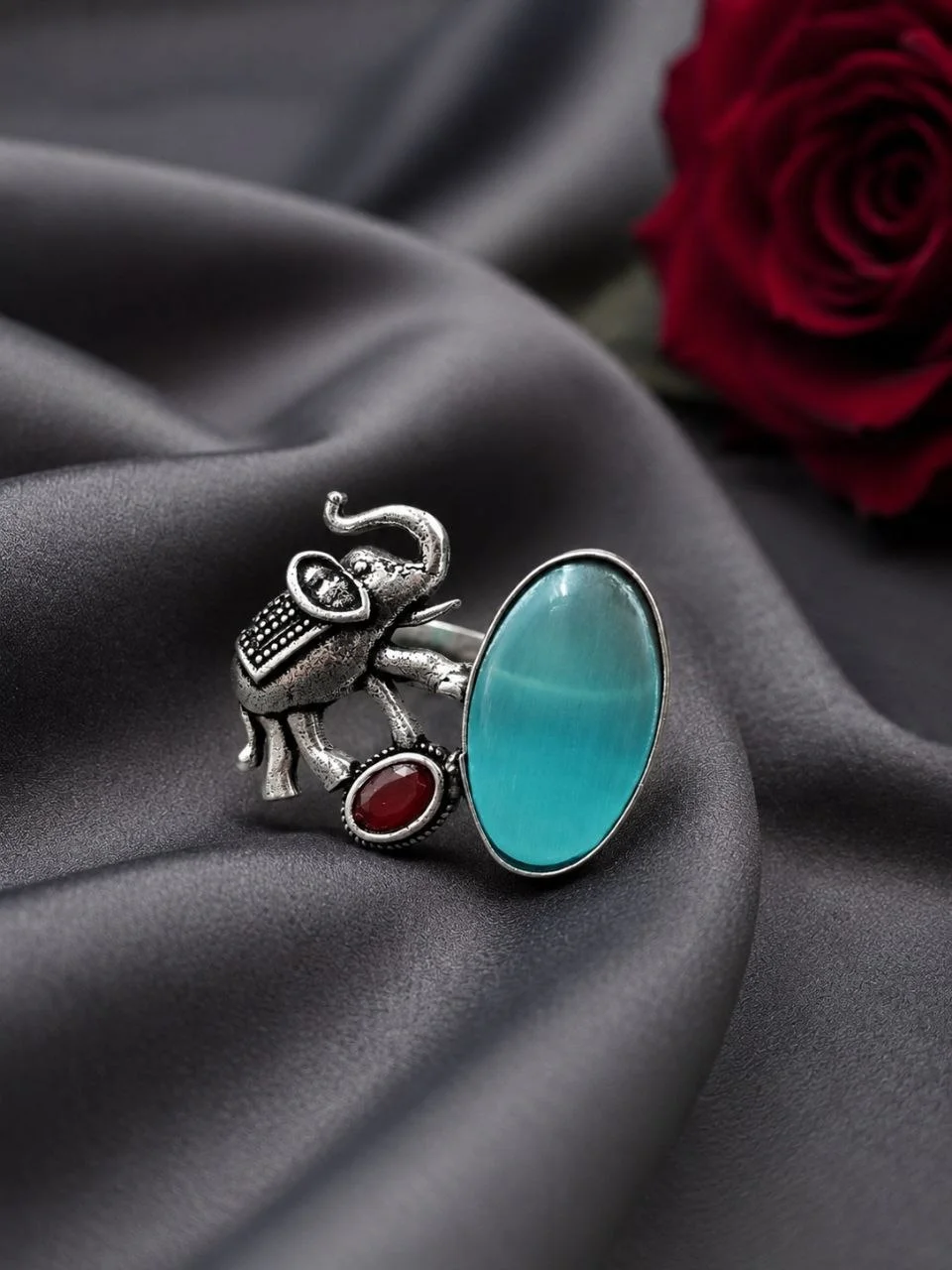
An elephant worked in oxidised silver stands beside an oval turquoise cabochon, with a smaller blue stone below, the three elements arranged across the finger. The band adjusts.
The elephant is not set on the stone or framed by it — the two sit next to each other as equal elements. That arrangement is less common than a centred motif and it changes the reading: rather than one subject with decoration around it, there are two objects in conversation, and the eye moves between them. It also lets the ring spread along the finger instead of piling up at one point.
This is the pairing that runs through Rajasthani, Kutchi, Tibetan and Afghan silverwork, and the reason is material rather than fashion. Turquoise is opaque and chalky rather than glassy, so it reads as a substance sitting in the metal rather than a jewel stuck onto it. It belongs to the same family of surfaces as blackened silver, which is why the two never look like they come from different pieces.
Elephants carry specific meaning in Indian ornament — Gajalakshmi, the ceremonial procession, the auspicious arrival — rather than being decorative animals. Blackening is what keeps the figure legible: an animal is recognised by outline, and highlights running across polished curved metal destroy an outline.
Adjustable at the back, so no ring size is needed. The elephant has a right way up, so sit it upright.
Wear it alone or with one narrow plain band. Turquoise and silver suits white, indigo, teal and ivory, and anything with mirror work.
Festivals, daily wear, travel, daytime functions and family gatherings.
Light, with the stones set low so nothing catches.
This is brass given an oxidised, antique-silver finish rather than solid silver. The metal is deliberately darkened and then the raised surfaces are polished back, so the blackening stays in the recesses while the high points stay bright. That contrast is the entire point of oxidised work — it is what makes every engraved line, pierced opening and raised edge read separately instead of dissolving into one shiny surface. It also means the finish is not uniform by design, and small variations between pieces are normal rather than faults.
Put it on after perfume, hand cream and sanitiser, and take it off before washing up, swimming or sleeping. Wipe with a dry soft cloth only. Do not use silver polish, dip cleaners or toothpaste — they strip the blackening out of the recesses, which is the one kind of damage that cannot be undone on an oxidised piece. Store it dry in a pouch, away from other rings that could scratch it.
Type: Adjustable elephant ring. Metal: Brass. Finish: Oxidised antique silver tone. Work: Worked elephant beside a turquoise cabochon and a small blue stone. Fit: Adjustable, open band.
| Metal | Brass |
| Stone Type | Turquoise |
| Weight (grams) | 9.00 |
| Colour/Finish | Aqua-blue |
| Occasion | Daily Wear |
| Gender | women |
| SKU/Product Code | KEYU9-69F3F80C0F |