| Stone Type | Glass & CZ Stones |
| Weight (g) | 0.00 |
| Colour | Sea Green |
| Occasion | Party, Daily Wear, Casual |
One large stone, an uneven organic outline, and the thinnest possible rim of gold-tone metal holding it. There is no border, no carving and no second stone. It is the most modern-looking ring in this range by a wide margin and the only one that would not look out of place in a contemporary jewellery shop.
The irregular shape is the whole idea. A cut stone is a statement about control — someone imposed a geometry on a mineral. A freeform stone is the opposite: the outline is whatever the material gave, and the setting simply follows it. That is a twentieth-century idea in jewellery, associated with studio makers who wanted the stone to look found rather than manufactured, and it is why this ring reads as art-school rather than as traditional.
Keeping the bezel thin is what makes it work. A heavy rim would turn the stone into a jewel in a frame; a thin one lets the outline stay visible as an outline, so your eye reads the shape of the stone rather than the shape of the setting.
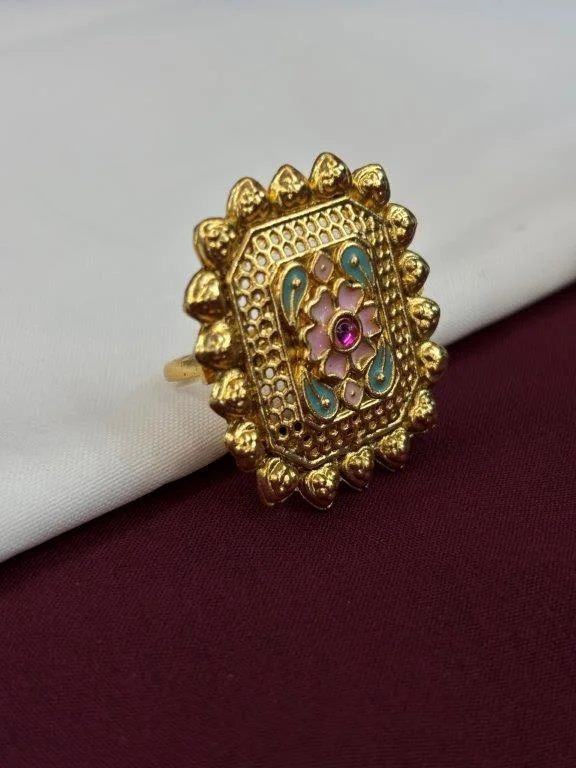
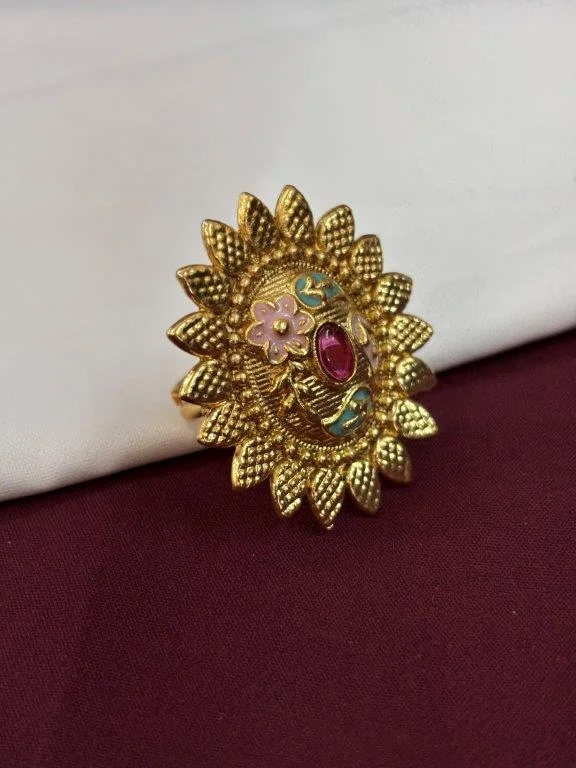
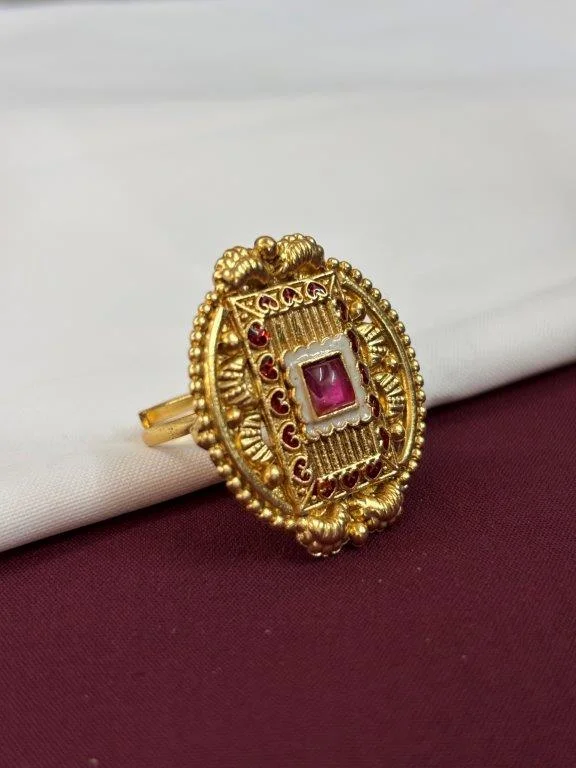
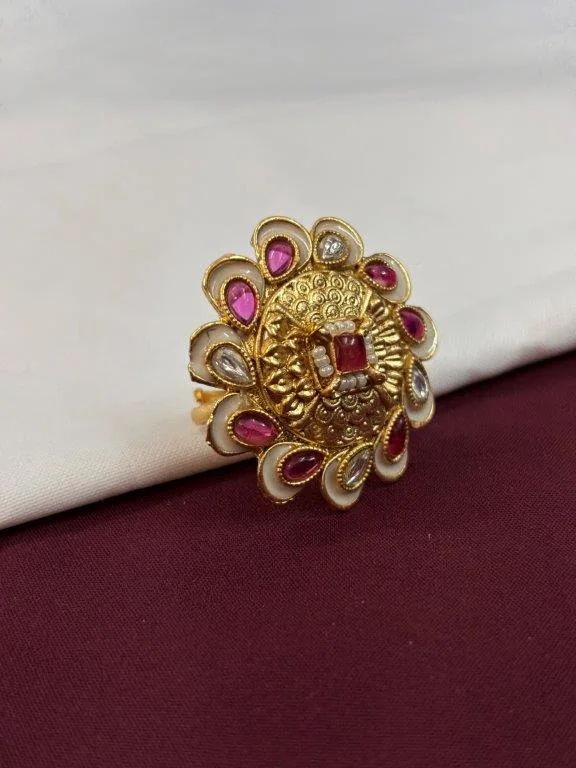
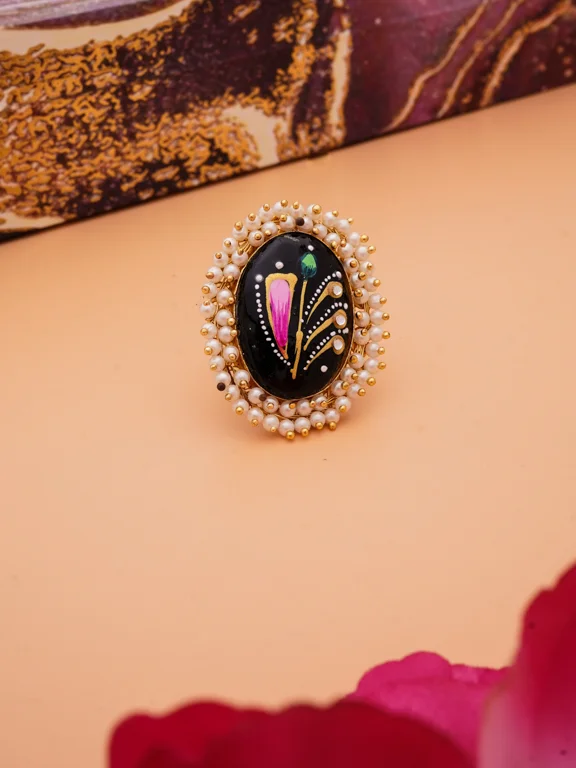
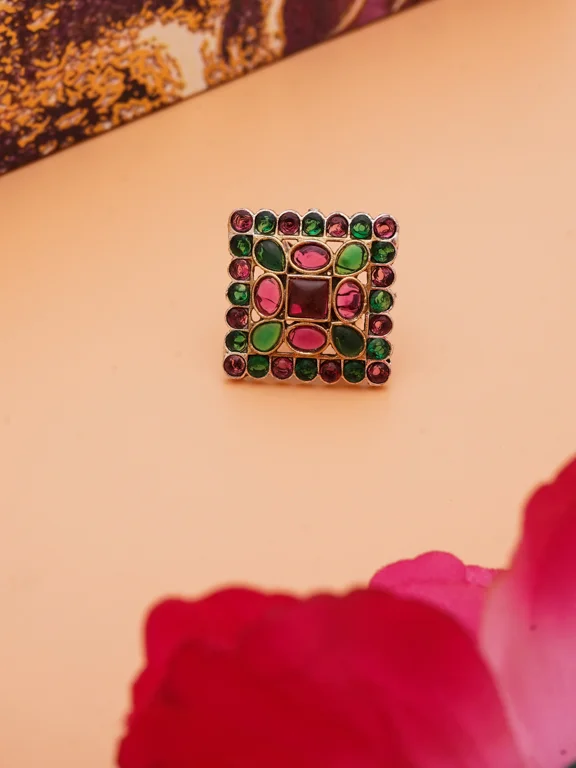
A word on what this style actually is. Kundan is the technique of setting a stone without claws: the stone is laid into a recess and then strips of pure, very soft gold are pressed in around it until the metal grips it. It is the oldest setting method in India, it predates the use of prongs by centuries, and it is why Mughal-period jewellery has that characteristic flat gold rim around every stone. What you are buying here is the look of that technique rendered in plated brass with glass and cubic zirconia, which is what the whole Indian imitation-jewellery trade is built on.
Three colourways are stocked. Sky Blue is the best-stocked and the coolest. Sea Green is the one in the main photograph and the most striking. Pink is the softest. All three are translucent rather than clear, which is what gives them depth.
The piece is brass with a gold-tone plating. It is not gold and is not sold as gold — what it gives you is the warm colour and the weight of a much more expensive ring, in something you can wear to a wedding without thinking about it, and replace without regret if it is lost.
This ring is adjustable. The band is not a closed circle — it is a tapered strip coiled so the two ends overlap behind the finger, and you open or close it by a few millimetres with your fingers. In practice that covers most adult sizes, roughly a UK J to a UK S, which is why almost all Indian fashion rings are made this way: nobody has to know their ring size, and the same ring still fits when knuckles swell in summer.
Adjust it off the finger, not on it, and move it gradually. Opening and closing the same band repeatedly is what eventually tires the metal, so set it once to your finger and leave it there.
It is a big ring that sits flat rather than tall, so it is more wearable than its size suggests — there is nothing on it to catch. Wear it alone, on the index or middle finger, with plain modern clothes rather than with a saree; it is the one ring here that looks better with a linen shirt than with silk.
Rings take more punishment than any other piece of jewellery because hands do the work. The things that actually shorten a plated ring's life are water, soap, hand sanitiser, perfume and cooking oil, in roughly that order. The habit worth building is simple: the ring goes on last when you are dressing and comes off first when you are washing up, bathing, cooking or swimming.
Clean it with a dry soft cloth only. Never use a silver dip or a polish — a dip strips an oxidised finish completely and will take gold plating with it, and a polish wears plating thin at exactly the high points you want to keep bright. Store it dry and on its own, because rings scratch each other in a shared box.
| Stone Type | Glass & CZ Stones |
| Weight (grams) | 0.00 |
| Colour/Finish | Sea Green |
| Occasion | Party, Daily Wear, Casual |
| Gender | women |
| SKU/Product Code | KEYU-NAA1155 |