| Weight (g) | 0.00 |
| Colour | Dual Tone |
| Occasion | Festival, Traditional, Daily Wear |
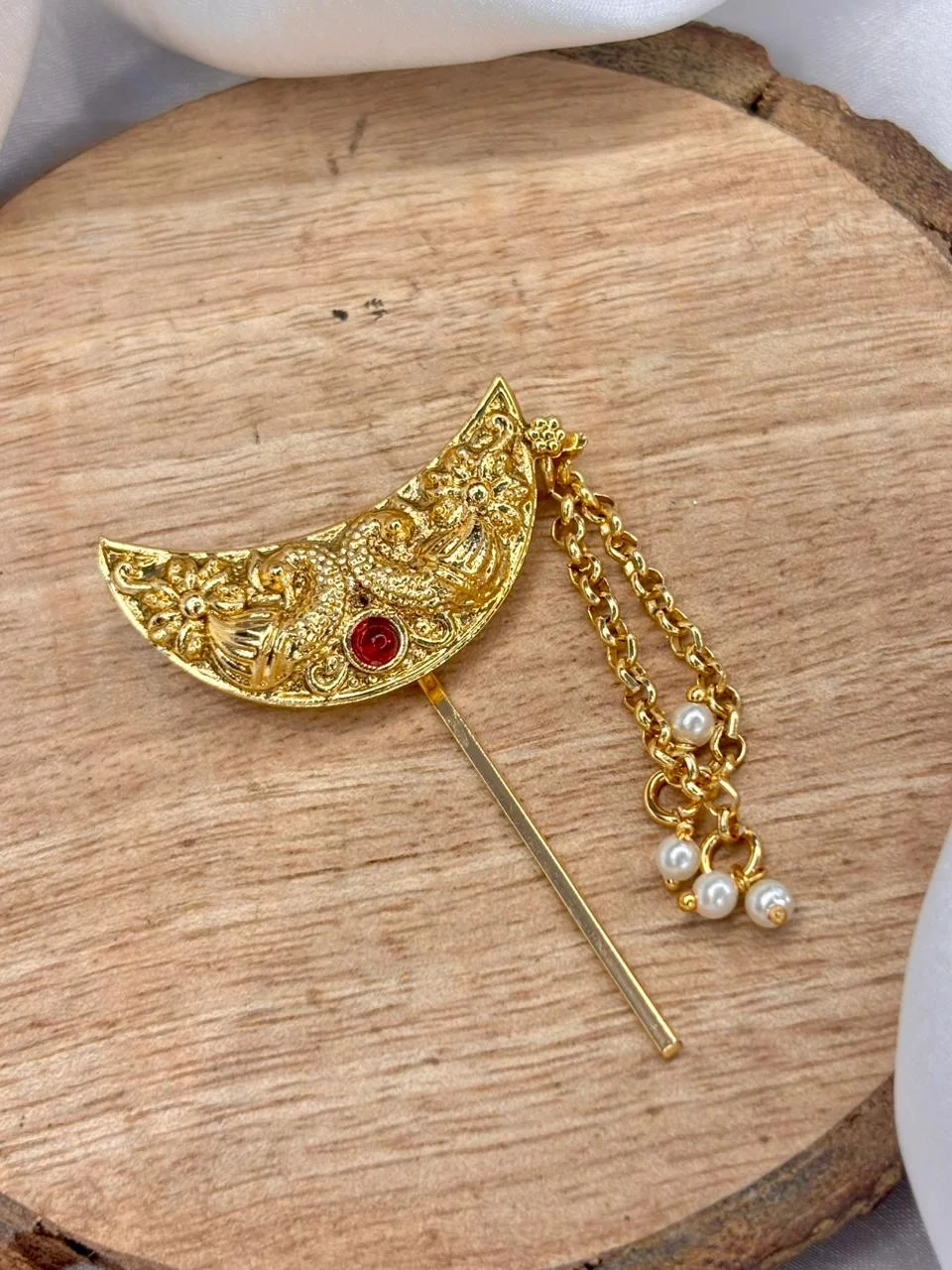
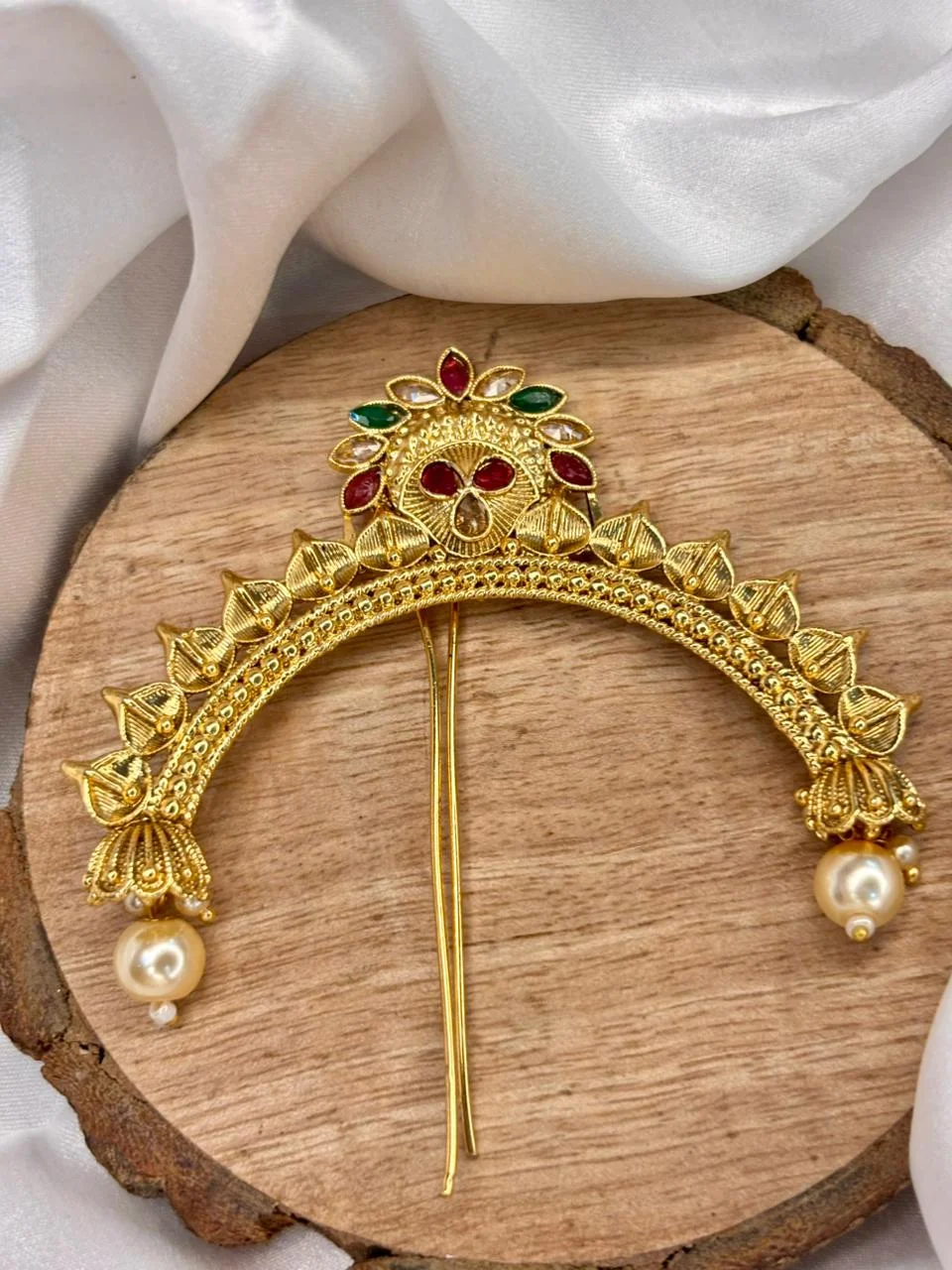
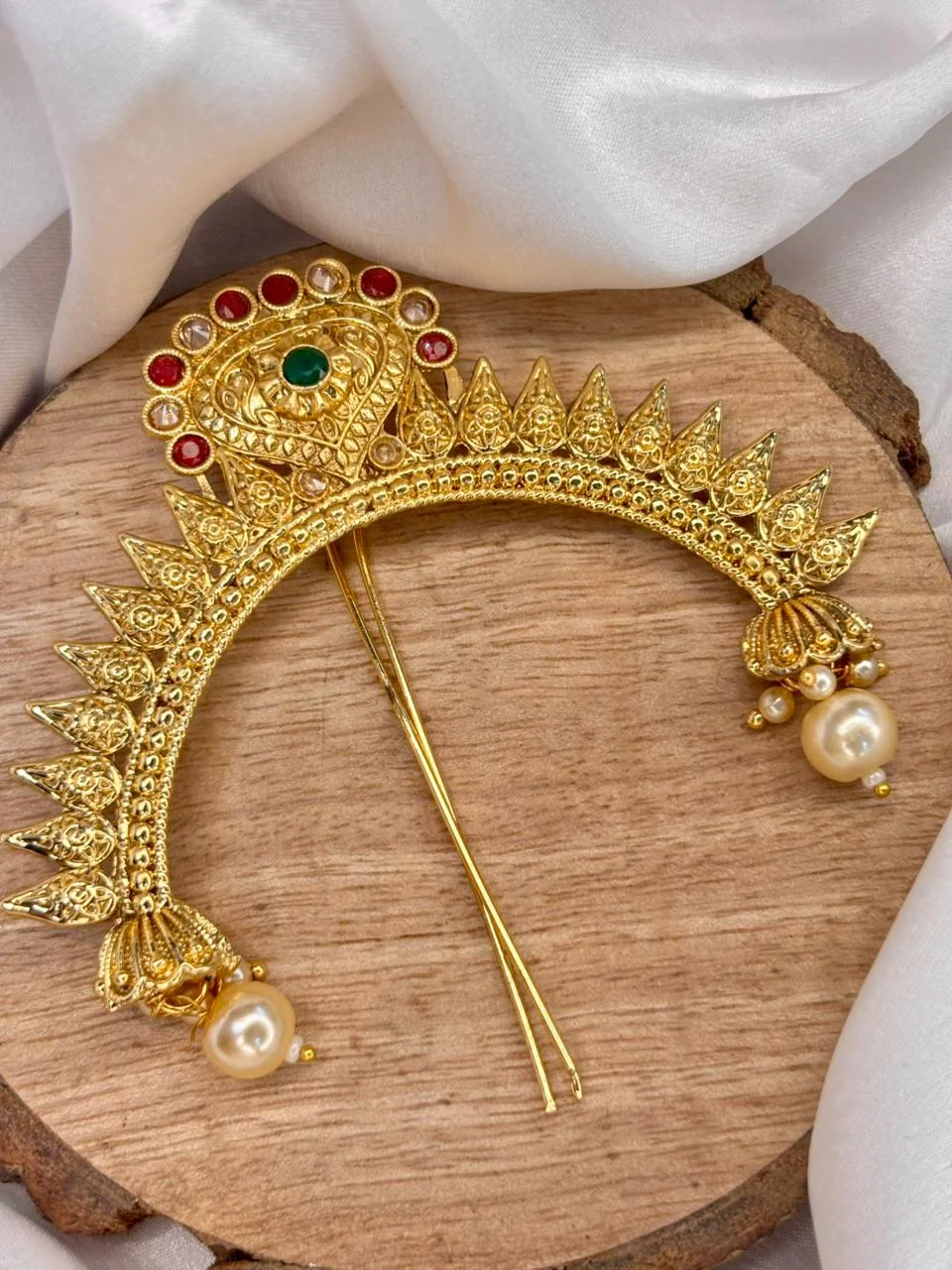
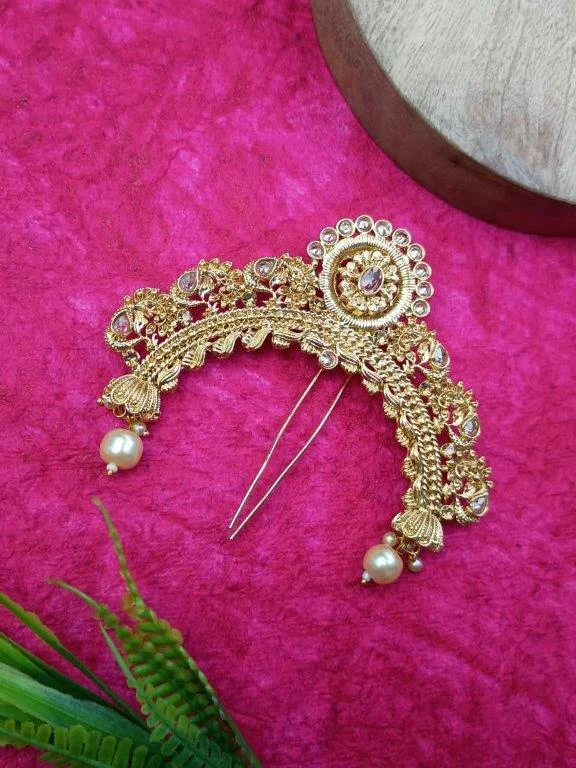
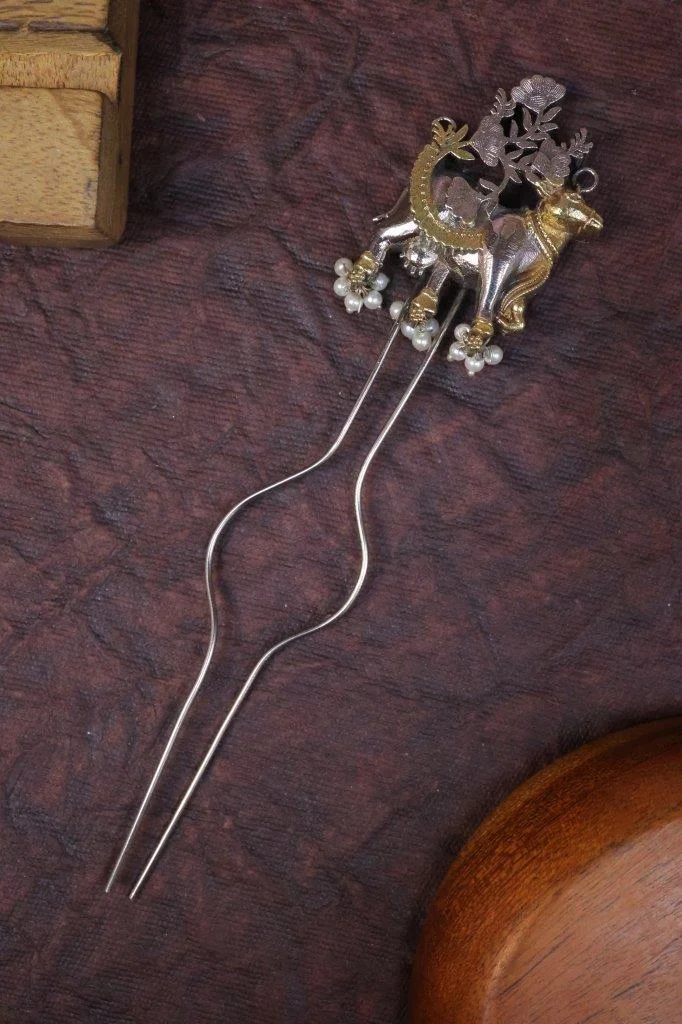
A juda pin is a two-prong fork that slides through a bun and holds it by friction rather than by a clip or an elastic. It is the oldest way of pinning long hair up and still the most secure for heavy hair, because the prongs pass through the coil of the bun rather than gripping the outside of it. What sits above the prongs is what you actually see, and on this one it is a deer.
The animal stands in profile, modelled in the round with its head lifted and branching antlers rising behind it. The body is bright silver tone; the antlers, the crescent arch behind the deer and parts of the foliage are picked out in gold, so the two metals separate the animal from its background before you have read any detail. Below the motif hang small clusters of white pearls on short gold links, which move when you do.
The deer is an unusual choice in Indian hair ornament, where peacocks and elephants dominate, and it is worth something for exactly that reason — it reads as traditional in its making without being the motif everyone else is wearing. It belongs to the same tribal and folk vocabulary as the camel and the fish, animals that appear on Rajasthani and Kutchi silver because they were part of the landscape rather than the pantheon.
The pin is 5.5 inches long overall, which is a full-size juda pin rather than a decorative short one. That length matters: a short pin will not hold a thick bun, and the commonest reason these slip is that the pin was too small for the hair rather than that it was badly made. The prongs are smooth and slightly tapered so they pass through hair without snagging, and they are set wide enough apart to grip.
To use it, twist the hair into a bun, then push the pin in at the edge of the coil pointing slightly downwards, let the prongs pass under the bun and bring them back out the other side so they end up lying against the scalp. Pushed straight in it will work loose; angled through, it will hold all day.
Wear it with the hair pulled smooth so the deer sits clear against it. It suits a plain kurta, a cotton saree or an occasion outfit equally, because the piece is quiet in colour even though it is detailed. Base metal is brass with gold and silver tone platings, with no stones.
One thing worth knowing about hair ornaments specifically, because it is the fastest way to ruin one. Hairspray is the enemy of plated metal. It settles as a film, it is slightly acidic, and because a hair pin sits directly in the spray it collects far more of it than a necklace ever would. Spray first, let it dry completely, then put the pin in — and wipe the metal with a dry cloth when you take it out. That single habit is the difference between a plated pin lasting a season and lasting years.
Listed for WhatsApp enquiry rather than direct checkout, so we can confirm stock before you order.
Dual-tone means two platings on one piece — a bright silver tone and a warm gold tone, applied to different parts of the same design so each section reads separately. It is harder than a single finish because the two have to be masked off from one another, and it is why these pieces show their detail so clearly: the eye separates the gold elements from the silver ones before it has read a single stone. The base metal underneath is brass, so this is plating rather than solid gold or silver.
Put this on after perfume, hairspray and hand cream, and take it off before washing, swimming or sleeping. Wipe with a dry soft cloth and use a dry soft brush around the stone settings and between any pearls, where a cloth cannot reach. Store it in a zip-lock pouch — which is what the supplier themselves advise, and the single most effective thing for a plated piece, because it keeps humid air off the metal. Never use silver polish, dip cleaners or an ultrasonic cleaner.
| Weight (grams) | 0.00 |
| Colour/Finish | Dual Tone |
| Occasion | Festival, Traditional, Daily Wear |
| Gender | women |
| SKU/Product Code | KEYU-NAA3300 |