↔ Drag or swipe · Double-click to fullscreen
| Metal | Brass |
| Stone Type | Meenakari |
| Weight (g) | 20.00 |
| Colour | Oxidised |
| Occasion | Festival |
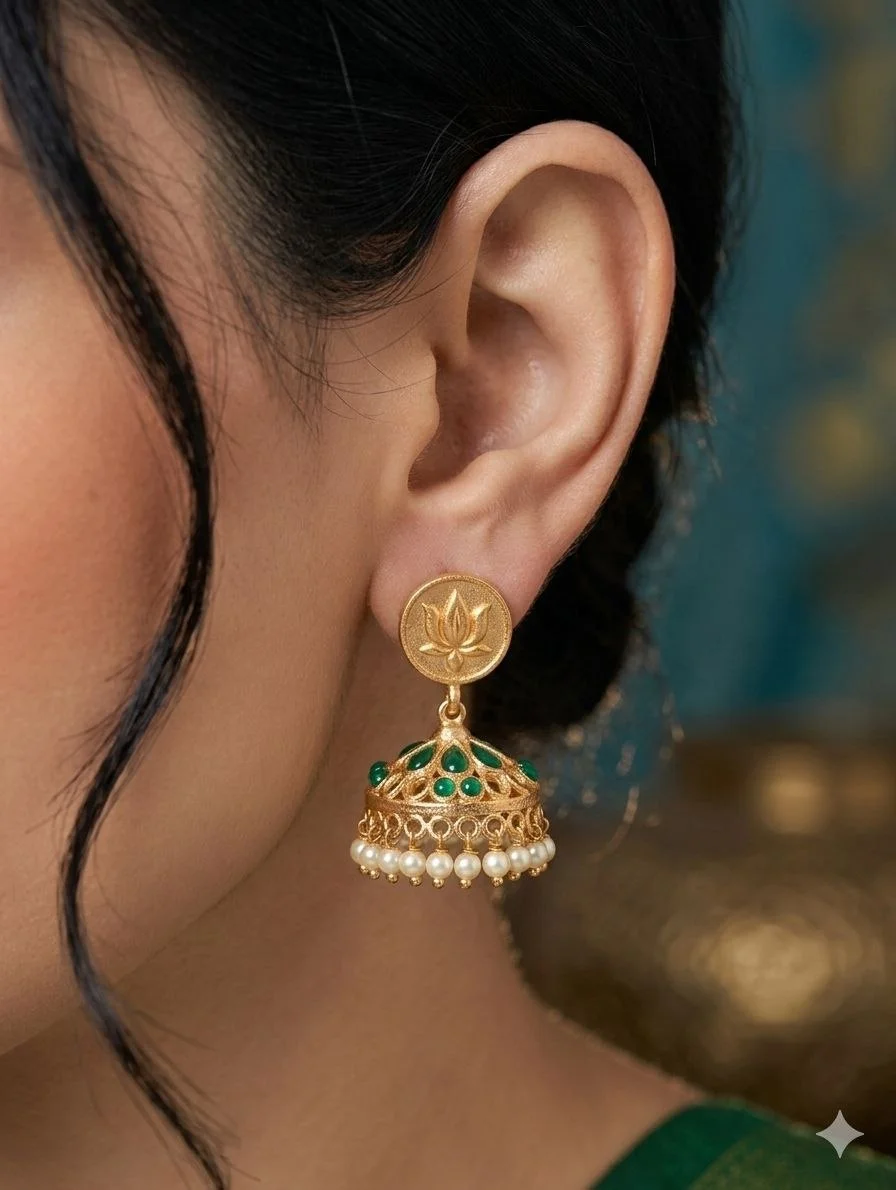
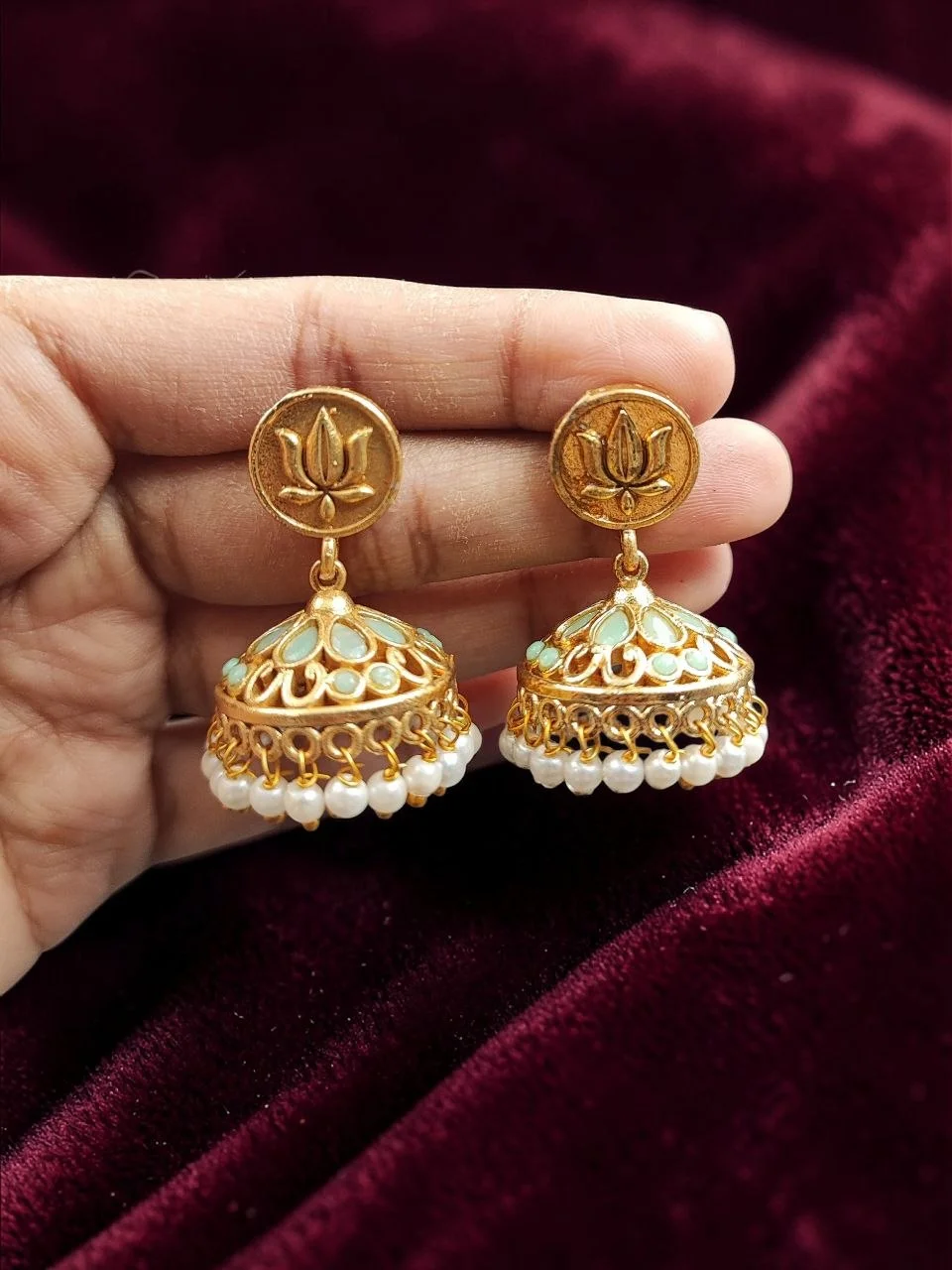
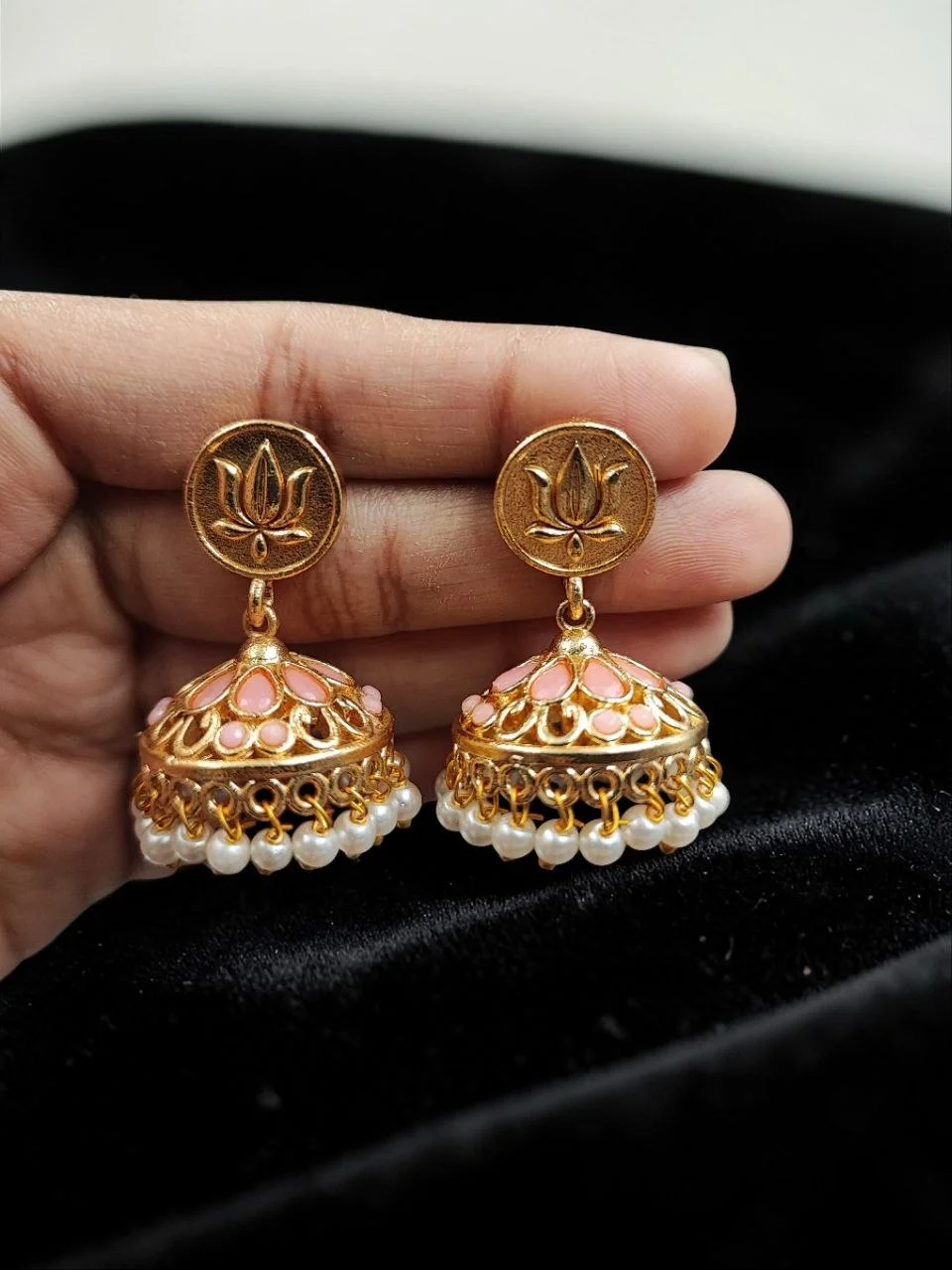
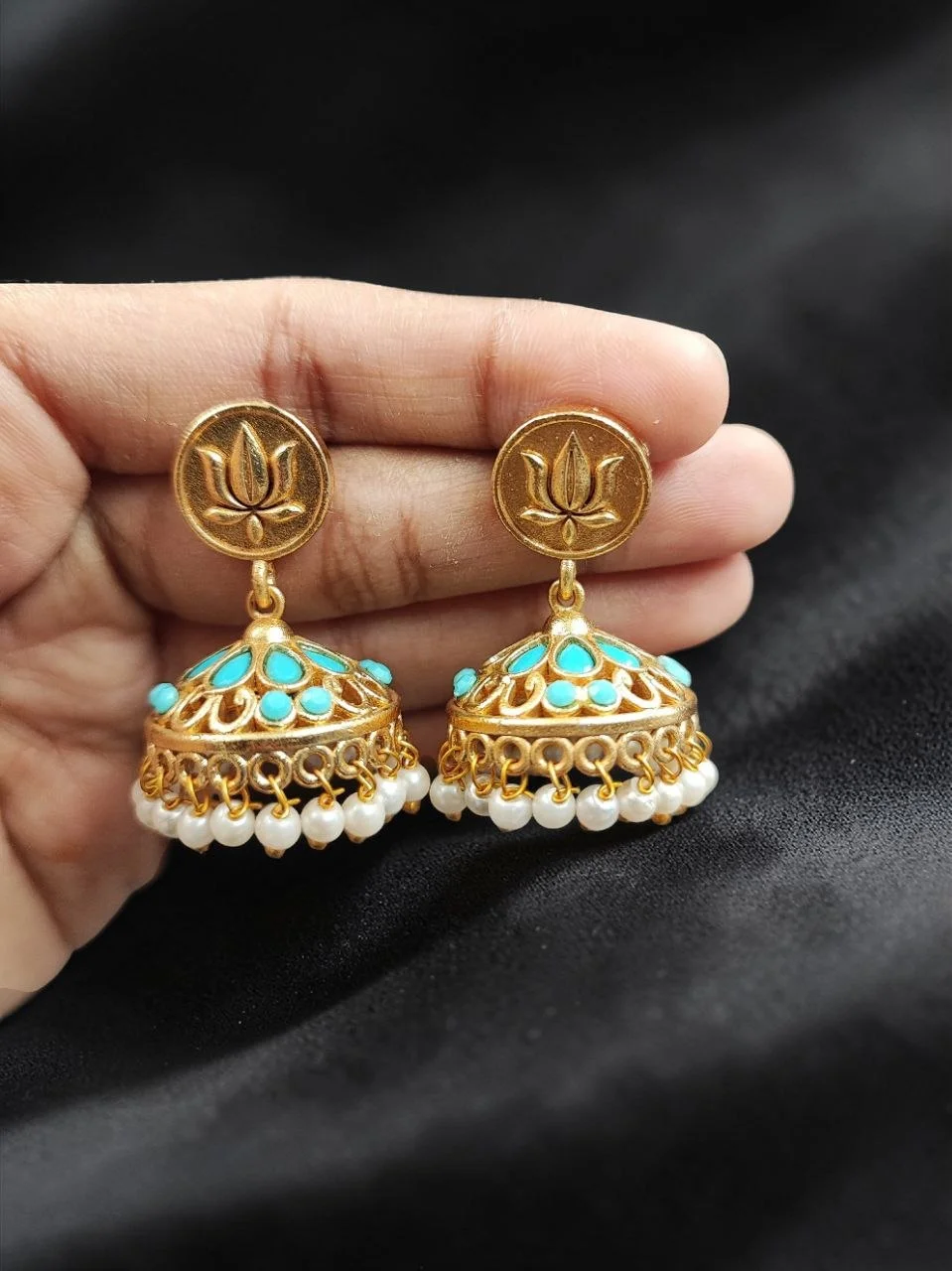
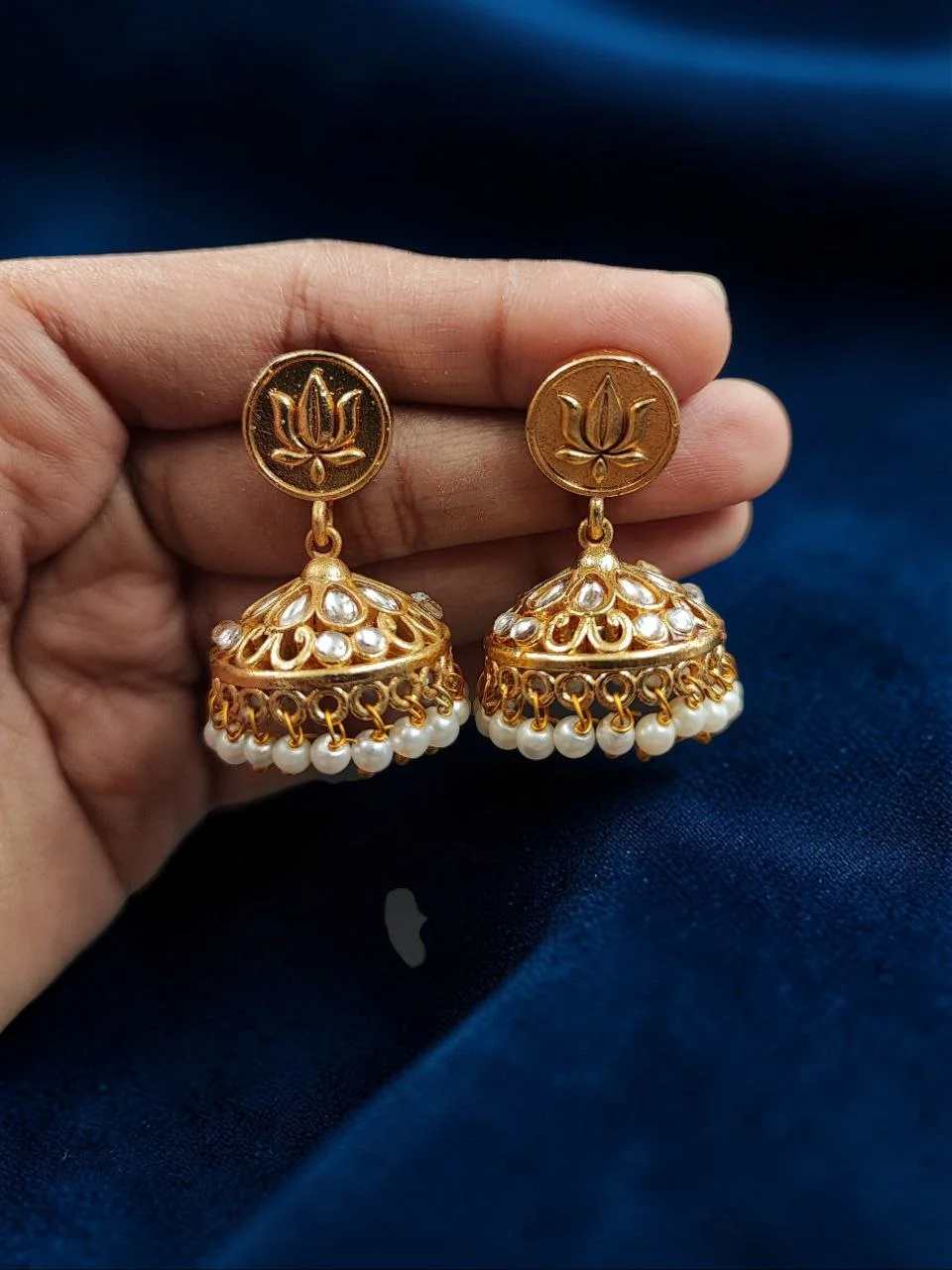
A flat lotus stud in plain gold sits at the lobe, and below it hangs a bell banded with green meenakari enamel between gold ribs, finished with a close row of pearls at the rim.
Green is the oldest and most common meenakari colour, and the reason is chemical rather than aesthetic — green enamel was among the most stable of the early formulations and survived firing most reliably. It stayed because it works: green is the one strong colour that reads as warm next to gold rather than competing with it, which is why green-and-gold remains the default pairing in Indian jewellery after several centuries.
The enamel is applied in bands that follow the curve of the bell, separated by raised gold ribs that hold the colour in place — this is the structural principle of meenakari, where the metal provides the walls and the enamel fills between them. The lotus stud above is left entirely plain, so the colour is concentrated in one place and the top acts as a quiet gold frame for it. The pearls are a single even row.
Green meena is a festival staple and the natural choice for pujas, Navratri and any occasion with a traditional dress code. It sits beautifully against gold-bordered silk, mustard, ivory and maroon. Hair up. These will also lift a plain cotton kurta considerably.
Festivals, pujas, weddings, daytime functions and family gatherings.
Light. The bell is hollow and the enamel adds negligible weight, so these are comfortable through a long function.
This piece is brass finished with a gold-tone plating rather than solid gold, which is what keeps the price where it is and the weight low enough for comfortable wear. Plating is a surface rather than a bulk property, so how long it lasts depends almost entirely on what it is exposed to. Perfume, hairspray, sweat, soap and chlorinated water all shorten its life; a dry cloth after wearing and a closed pouch between wearings extend it considerably.
Put these on after perfume, hairspray and foundation. Wipe with a dry soft cloth after wearing and use a dry soft brush between the pearl drops and inside the bell, where a cloth cannot reach. Hang or lay them flat in a pouch so the fringe is not crushed, and never use toothpaste, bleach or an ultrasonic cleaner.
Type: Meenakari jhumka earrings. Metal: Brass. Finish: Gold-tone plating with green enamel. Work: Plain lotus stud over an enamelled banded bell with pearl fringe. Closure: Post and butterfly back.
Weight is what decides whether an earring gets worn twice. These are hollow plated brass rather than solid metal, so a shape that looks substantial in a photograph sits lightly on the lobe — which is the whole reason a large traditional earring can be worn through a wedding without the piercing complaining by the end of it. If you are used to small studs, expect to feel the length for the first hour and then stop noticing it.
A piece at this price is bought to be worn rather than kept. The sensible way to judge it is by how often it will leave the box, not by what it would fetch if it never did.
| Metal | Brass |
| Stone Type | Meenakari |
| Weight (grams) | 20.00 |
| Colour/Finish | Oxidised |
| Occasion | Festival |
| Gender | women |
| SKU/Product Code | KEYU9-3BA929E460 |