





Antique silver-toned pieces with real depth in the detailing — jhumkas, chokers and cuffs that sit as easily with a cotton kurta as with a festive chaniya choli.
Earrings, necklaces and more in antique-toned silver.
Antique-toned pieces across earrings, necklaces and more.

 New
New
 New
New
 New
New
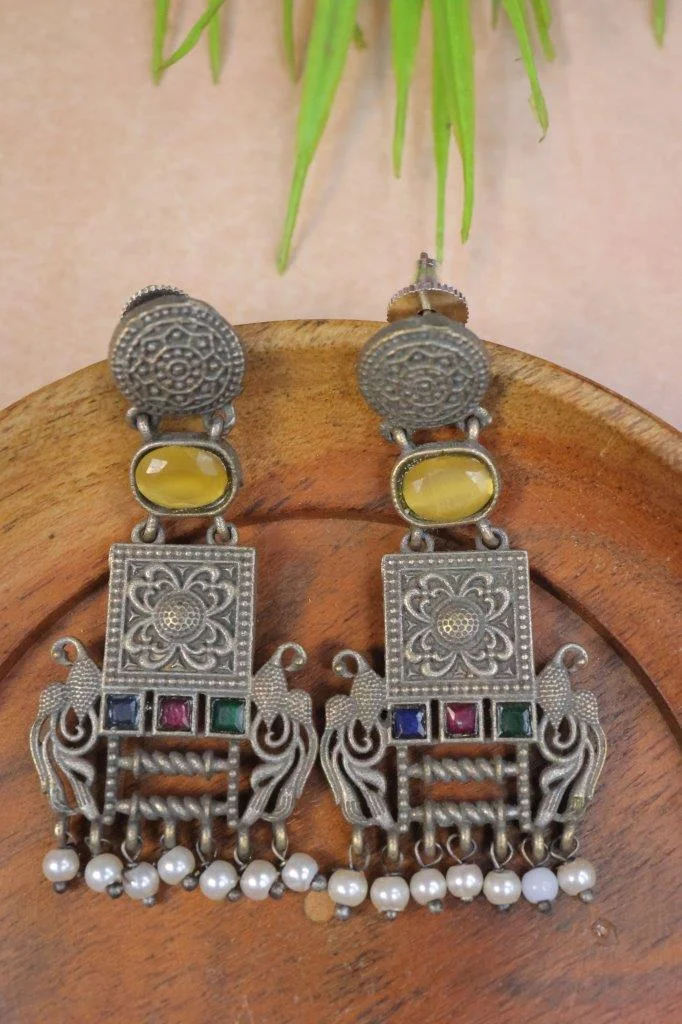 New
New
 New
New
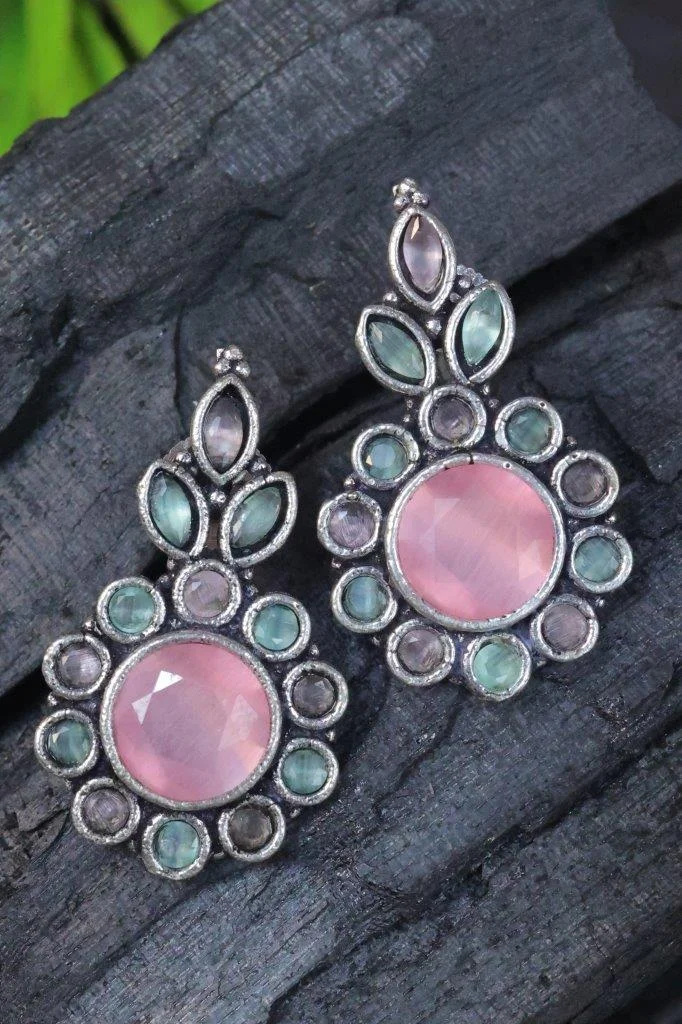 New
New
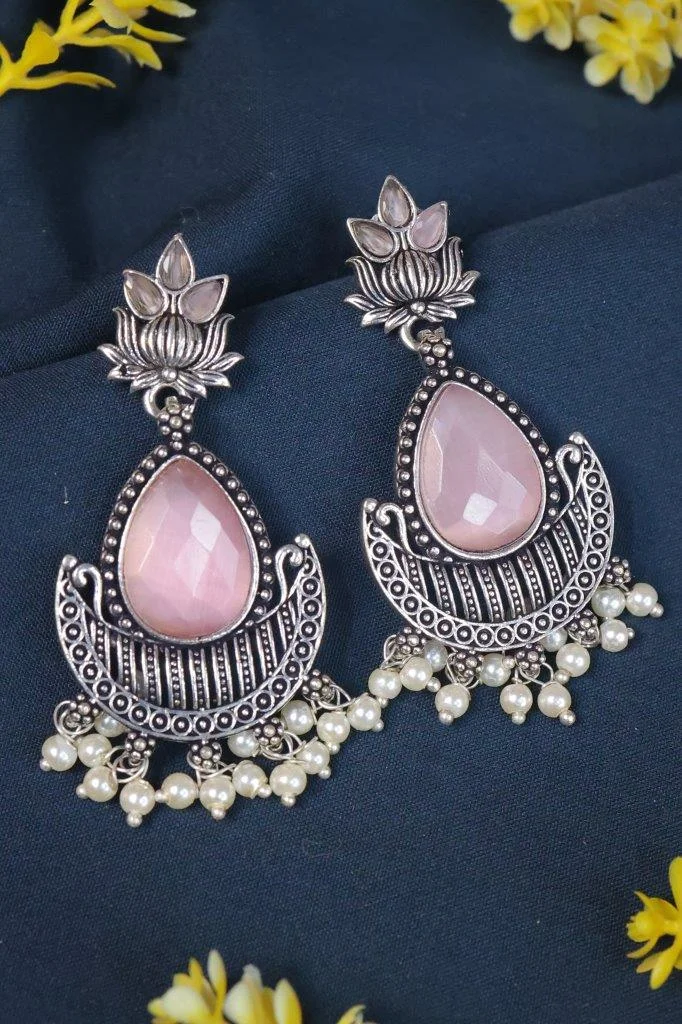 New
New
Oxidised is the natural partner to garba nights — the antique tone holds its own against bright chaniya choli colours instead of competing with them. Layer a long haar over a choker, add oversized jhumkas, and stack two or three cuffs on one wrist. Because the finish is matte rather than mirror-bright, it photographs well under string lights and does not flare in flash.
Oxidised jewellery earns its character from contrast. The metal is darkened, then the raised detail is polished back, so every curve and cut in the design catches light while the recesses stay deep and shadowed. It is why an oxidised jhumka reads as intricate from across a room.
That finish also makes it unusually easy to wear. Antique silver tones sit comfortably against every colour — the brights of a Navratri chaniya choli, the muted handlooms of an everyday kurta, even denim and a plain white shirt.
Our oxidised range spans jhumkas and danglers, chokers and haars, cuffs and stacking rings. Pieces are finished to hold their tone through regular wear, and priced so a full festive set does not have to be a single large purchase.
Oxidised jewellery — often written oxidized, and sometimes sold as antique silver or German silver jewellery — is made by deliberately darkening the surface of the metal and then burnishing the high points back to a shine. The result is a piece that looks aged and hand-worked rather than freshly plated.
The style has deep roots in Indian craft traditions. Tribal and temple designs from Rajasthan, Gujarat and the South rely on exactly this contrast to make dense motif work legible: peacocks, florals, deities and geometric jaali all read more clearly in an oxidised finish than in a flat polish.
It is also one of the most forgiving finishes to own. Because the look is meant to be antique, ordinary wear and small marks simply add to it rather than spoiling a mirror shine. Keep pieces dry, store them away from direct humidity, and wipe with a soft dry cloth — that is genuinely the whole routine.
At Keyura the oxidised range runs across earrings, necklaces, bangles and rings, so a full look can be built in one finish. It is a natural choice for Navratri and garba nights, where the pieces have to stand up against strong colour and movement, but the same jhumkas work just as well with everyday cotton.
Oxidised jewellery is made by deliberately darkening the surface of the metal, then polishing the raised detail back to a shine. The contrast makes intricate motif work — peacocks, florals, temple and jaali patterns — far more visible than a flat polish would. It is also sold as antique silver or German silver jewellery.
Good-quality oxidised pieces should not. The darkening is a surface treatment on the metal, not a coating that rubs off. If you have very sensitive skin, keep pieces away from perfume and lotion and remove them before bathing or swimming.
Wipe with a soft dry cloth only. Do not use silver polish or dips — those are designed to strip exactly the darkened finish you want to keep. Store in a dry pouch away from humidity, and the antique tone will hold for years.
Almost anything. The antique silver tone sits comfortably against bright festive colours like a Navratri chaniya choli, muted handloom cottons, and plain western pieces such as a white shirt or denim. It is one of the easiest finishes to style.
Yes. Because the look is intentionally antique, ordinary marks and wear simply add character rather than spoiling a mirror shine — which makes it more forgiving day to day than high-polish plating.
Filter by price, colour, metal and availability across the full edit.

